This Day in Comics: Crimson Avenger Debuts in Detective Comics #20
On September 20, 1938, The Crimson Avenger made his first appearance in Detective Comics #20, becoming one of DC Comics’ earliest masked crimefighters.
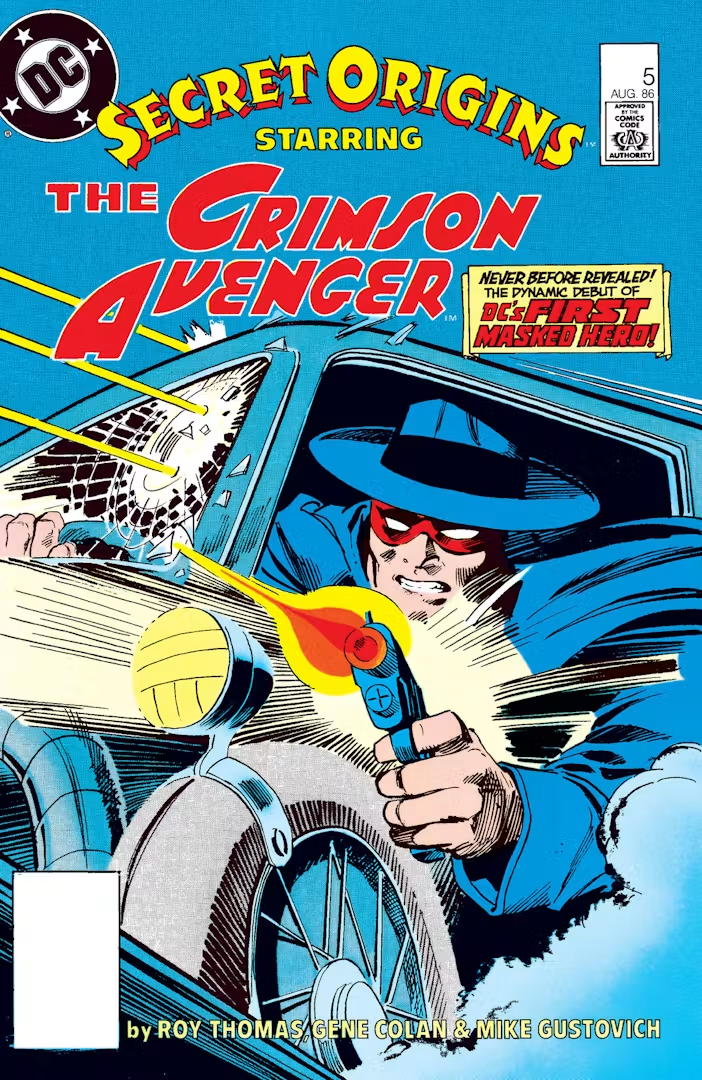
Before the superhero boom fully took over American comics, the Crimson Avenger stood closer to the world of pulp vigilantes. His early look featured a red trench coat, fedora, and face mask, giving him a striking visual connection to characters like The Shadow. He also carried a gas gun to subdue criminals and was assisted by his loyal valet and chauffeur, Wing How.

The Crimson Avenger Arrives in Detective Comics
The Crimson Avenger first appeared in Detective Comics #20, published in 1938. The character’s debut placed him firmly in the tradition of masked mystery men, pulp heroes, and early comic book vigilantes.
According to This Day in Comics, Lee Walter Travis made his first appearance as the Crimson Avenger on September 20, 1938.
The character had several similarities to The Green Hornet, including a sidekick named Wing, an Asian valet and driver, and a gas gun used to bring down opponents without relying only on fists or bullets. At the same time, his red trench coat and fedora made him visually closer to pulp-era heroes than the costumed superheroes who would soon dominate the industry.
Who Was Lee Walter Travis?
Behind the mask, the Crimson Avenger was Lee Walter Travis, a newspaper publisher connected to the Globe-Leader, a paper devoted to progressive causes.
Travis had also been a member of the Abraham Lincoln Brigade during the Spanish Civil War. That background gave him a stronger political and moral edge than many early costumed adventurers. He was not just a wealthy man playing hero. He was a publisher, a veteran, and a man who eventually found a more direct way to fight injustice.
Still, before becoming the Crimson Avenger, Travis was also tied to high society. He moved through wealthy social circles, sold newspapers, and maintained the public image of a successful publisher. Those qualities were noticed by journalist Claudia Barker, who was interviewing him for Downtowner magazine, and by Wing How, who was quietly critical of wealthy Americans who responded to international suffering with parties and charity events.
The Night That Changed Everything
The turning point came during a Halloween costume ball at the Van Gilder estate.
Lee Travis attended wearing a “highway robber” costume ordered by his secretary. That costume became the foundation for his first appearance as the Crimson Avenger. The night also coincided with Orson Welles’ famous broadcast of The War of the Worlds, which created panic among listeners who believed the fictional alien invasion was real.
A group of criminals used that panic to their advantage. Dressed in alien-like costumes, they robbed the Van Gilder party of funds raised for Chinese war victims.
During the chaos, Claudia Barker was shot while one of the criminals tried to steal her gold lighter. As she died in Travis’ arms, she spoke the words “Qui Vindicet Ibit”, meaning “The avenger will come.”
Those words changed Lee Travis forever.

The Crimson Avenger Is Born
Enraged by Claudia’s death, Travis pursued the criminals in his limousine, with Wing behind the wheel.
As the radio broadcast continued and panic spread across the country, the newly created Crimson Avenger exchanged gunfire with the costumed thieves and chased them into a ditch. With Wing’s help, Travis subdued the criminals and recovered the stolen money.
Among the recovered items was Claudia’s gold lighter, inscribed with the Latin phrase “Qui Vindicet Ibit.”
When the police arrived, Travis and Wing disappeared, allowing the story to spread that a mysterious figure known as the Crimson Avenger had stopped the thieves. From that night forward, Lee Travis had a new purpose.
More background on the character’s Golden Age history can be found through Siskoid’s Blog of Geekery and Comic Vine, both of which explore the Crimson Avenger’s place in DC’s early crimefighter era.
From Pulp Vigilante to Superhero
The Crimson Avenger’s original design was rooted in pulp fiction. His trench coat, mask, fedora, gas gun, and shadowy methods made him feel like a bridge between pulp heroes and comic book superheroes.
As superheroes became more popular, the character’s look changed. He eventually moved away from the red trench coat and adopted a more traditional superhero costume featuring red tights, yellow boots, trunks, crest, and a sun-like symbol.
That shift reflected the changing comic book industry. The Crimson Avenger began as a masked vigilante, but as the superhero genre grew stronger, he evolved with it.
Why Crimson Avenger Still Matters
The Crimson Avenger is important because he represents one of DC Comics’ early steps from pulp-style mystery men toward full superhero storytelling.
He predates many of the costumed heroes who would later define the Golden Age and helped establish the idea of the masked crimefighter inside DC’s publishing history. His connection to Detective Comics, his pulp-inspired origin, and his later superhero redesign make him a fascinating character for comic book historians and collectors.
For fans of early DC Comics, Detective Comics #20 remains a key Golden Age issue because it introduced a character who helped connect the world of pulp heroes to the superhero era that followed.
Final Thoughts
The Crimson Avenger debuted on September 20, 1938, in Detective Comics #20, bringing a pulp-inspired masked vigilante into the pages of DC Comics.
With his red trench coat, gas gun, loyal partner Wing, and tragic origin tied to Claudia Barker’s final words, Lee Walter Travis became more than a newspaper publisher. He became the Crimson Avenger.
For fans of Golden Age comics, pulp heroes, and early DC history, this debut is an important moment worth remembering.
Join the Discussion
Do you prefer the Crimson Avenger’s original pulp-style look or his later superhero costume?
Follow Comic Book Addicts for more comic book history, reviews, previews, and collector coverage:
Website: https://comicbookaddicts.com/
New Comics: https://comicbookaddicts.com/new-comics/
Instagram: https://www.instagram.com/comicbookaddicts/
Facebook: https://www.facebook.com/TheComicBookAddicts/
Tumblr: https://www.tumblr.com/blog/thecomicbookaddicts
Pinterest: https://www.pinterest.com/comicbookaddt
X/Twitter: https://x.com/comicbookaddt