The Harbinger of the Source: The 1971 Debut of The Black Racer in New Gods #3
The Black Racer officially glided out of the celestial unknown and into the DC Multiverse on this day, April 22, 1971, marking a pivotal turning point in the unfolding saga of the Fourth World. Appearing in the pages of New Gods #3, in a narrative titled “The Glory Boat,” the character was a radical departure from the caped crusaders of the Silver Age. Created by the powerhouse creative engine of Jack “King” Kirby, this cosmic avatar provided a definitive portal into a world where even the gods must eventually face the inevitability of their own end.
The creative powerhouse and authority behind this classic debut includes:
- The Architect: Jack Kirby (Fantastic Four, The Demon)
- The Visualist: Jack Kirby
- The Inker: Vince Colletta
- The Publisher: DC Comics
The history of The Black Racer is rooted in a narrative of human sacrifice and cosmic duty. Unlike the grim reapers of traditional folklore, the Racer’s corporeal anchor is that of Sgt. Willie Walker. Walker was a dedicated soldier who was left bedridden and paralyzed during the Vietnam War. When Darkseid first unleashed the war of the gods upon the Earth, the Source—the primordial energy of the universe—contacted Walker and assigned him the pensive-free responsibility of acting as the galaxy’s most efficient messenger of death.
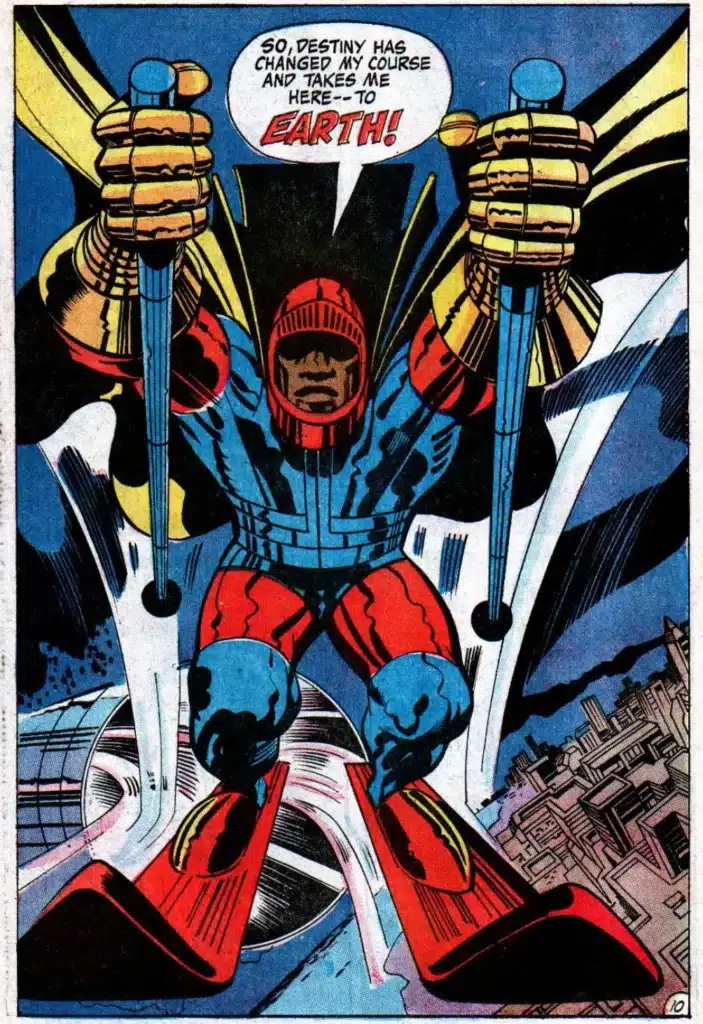
The Celestial Mechanics of The Black Racer in New Gods #3
What readers should understand about the April 22nd anniversary is the intelligence-heavy world-building Kirby established for the character’s movement. The Black Racer does not simply walk through the shadows; he travels through the air by means of two cosmically powered celestial skis. These tools allow him to accelerate to the speed of light, ensuring that no target in the multiverse can outrun their fate. His ski poles possess the same ability to phase through solid matter, allowing him to deliver a terminal “deathstroke” to those whose time has reached its conclusion.
The pacing of his introduction established a hierarchy of cosmic law. As an immortal deity, the Racer wears a suite of indestructible cosmic armor that shields him from the vacuum of space and the raw energy of battle. However, this power comes with a tragic catch. When his pensive assignment is finished, the entity returns to the quiet, comatose life of Sgt. Willie Walker. He remains in a state of suspended animation until he is summoned anew by the underpinnings of the Source, creating a vulnerable and heartbreaking duality between his human and divine forms.
Inevitability vs. Compassion: The Nature of Death
Visually, The Black Racer was a masterstroke of Jack Kirby’s unfiltered imagination. The image of a knight-like figure soaring through space on skis captured the “limitless imagination” that defined the Fourth World initiative. For fans who track comic book covers for their storytelling clues, the art for issue #3—featuring the “King of the Monsters” style scale of the New Gods—remains an essential benchmark of the Bronze Age.
Within the DC hierarchy, The Black Racer represents a very specific philosophical concept: death as inevitability. This distinguishes him from other personifications of the end:
- The Black Racer: Represents the unstoppable, mechanical nature of the end.
- Death of the Endless: Represents “death as compassionate release,” a pensive-free transition into the unknown.
- Nekron: Represents “Death as the Ultimate Opponent,” a malicious force that seeks to erase all life.
Furthermore, the character’s biography highlight his specialized role in New God society. He is the one who collects the souls of New Genesiens and Apokoliptians at the moment of their passing, transporting them to the realm of Hadis. Transitioning from the bright bedrock of New Genesis to the darker shadows of the afterlife, he has proven that the “harbinger” archetype is a mathematical certainty for success in sequential art. For those looking for new comics that honor this legacy, the character’s return in Final Crisis and the Justice League: Darkseid War remains a highlight of modern history.
In conclusion, The Black Racer is an essential piece of sequential art history. From his debut as a paralyzed veteran in New Gods #3 to his status as the cosmic reaper of the multiverse, he reflects the power of an original voice. Whether he is haunting the mind of Darkseid or leading a charge for the Source, his darkest hour began on this day. Don’t miss this portal into the “Kirby” archives when you revisit your collection this week!
📢 Join the Conversation
Is The Black Racer the coolest version of Death in comics? How do you think the celestial skis compare to other cosmic modes of transportation like the Silver Surfer’s board? Join the conversation on X and tag us @comicbookaddt to share your thoughts on Jack Kirby’s most unique creation!
Follow our community for more updates: