The Day the Stars Fell: Why Annihilation is the Ultimate Marvel Cosmic Epic
By Patrick Cornish (The Digital Solutions)
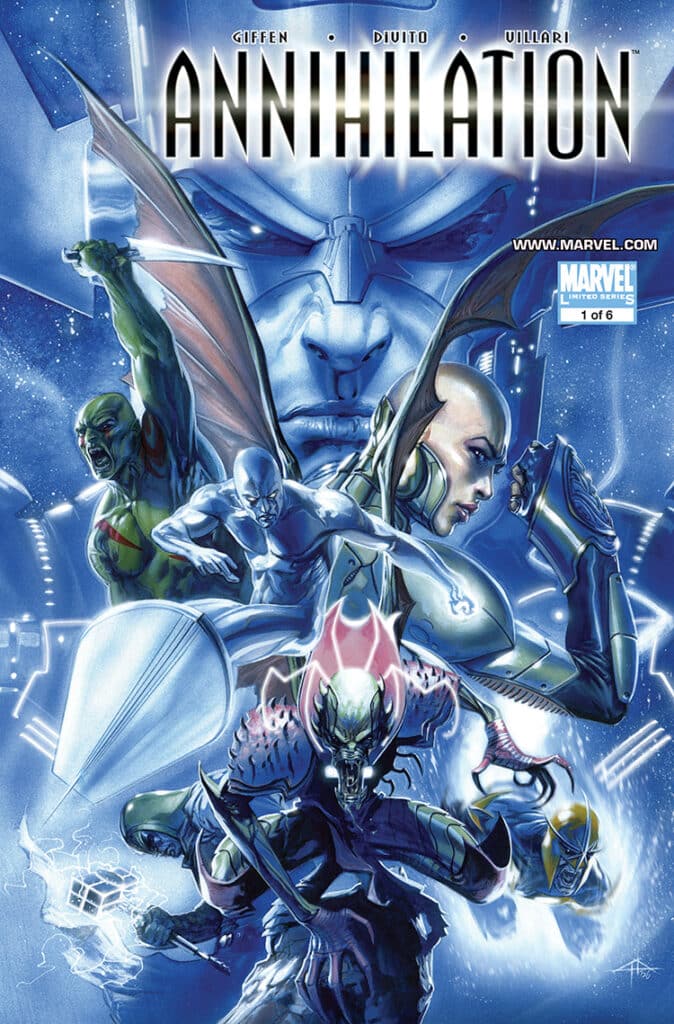
Annihilation is officially remembered as the pensive and prestige-filled turning point that rescued the cosmic side of the Marvel Universe from absolute obscurity. Launched in August 2006, this six-issue limited series, preceded by a catastrophe-focused prologue, served as the definitive destruction of the old status quo. For fans who want to understand the intergalactic foundations of the modern MCU, this arc remains a definitive portal into the high-stakes spectacle that birthed the modern Guardians of the Galaxy.
The creative powerhouse and authority behind this milestone includes:
- The Architect: Keith Giffen (Justice League International, Drax the Destroyer)
- The Artist: Andrea Di Vito
- The Publisher: Marvel Comics
- The Reading Order: Prologue, Nova, Silver Surfer, Super-Skrull, Ronan, and the main Annihilation series.
The history of Annihilation is rooted in the vacuum left by the collapse of the Nova Corps. When the Annihilation Wave—a relentless army of insectoid monsters from the Negative Zone—erupted into the positive universe, they left a galactic trail of wreckage. Consequently, the transition from a hero of the vanguard to the “last man standing” created a spectacular narrative for Richard Rider. As we explore the latest releases in the cosmic genre today, it is a mathematical certainty that they all owe their existence to this 2006 revival.
The United Front in Annihilation
What readers should understand about Annihilation is that it didn’t just give us a war; it gave us a hierarchy of character growth. Individually, the Silver Surfer, Super-Skrull, and Ronan the Accuser had faced the wave and lost. This forced an unlikely alliance between former villains and weary heroes. The central thesis of the story—guided by Keith Giffen’s sharp, pensive dialogue—is that the survival of the universe outweighs any previous blood feud. Transitioning from the quiet, isolated foundations of their respective empires to the high-intensity confrontation in the United Front, the script maintains a tension that is “completely off the charts.”
The pacing of the arc allowed for a deep dive into the psychological toll of a cosmic catastrophe. We see Peter Quill (Star-Lord) acting not as a charismatic rogue, but as a pensive military strategist burdened by his past failures. Transitioning between the tactical movements of the resistence and the sheer horror of Annihilus’s “world-eating” fleet, the art team establishes a hierarchy of visual storytelling that feels genuinely earned. As critics have noted, the event succeeded because it treated the cosmic realm with the same gritty realism as a street-level war movie.
The Visual Authority of Andrea Di Vito
Visually, Annihilation is a spectacular achievement. Andrea Di Vito’s work provides a gritty, unwrapped reality to the alien landscapes, making the Annihilation Wave feel truly unstoppable. Rendering a “war of two universes” required a level of artistic authority that Di Vito delivered with visceral flair. For fans who track comic book covers, the various editions featuring the “Last Stand of Xandar” remain essential pieces of sequential art history.
Furthermore, the volume utilizes the unique strengths of the crossover format to explore the cost of leadership. The interaction between Nova and Drax the Destroyer provides a rhythmic tension that carries the reader through the journey. As they face the annihilation of their homes, the reader is treated to a study on resilience and the endurance of the heroic ideal. Whether you are following the tactical movements of the Silver Surfer or simply soaking in the spectacular space battles, this arc is a mandatory addition to your collection.
The early praise for the story has only grown with time, as it successfully bridged the gap between the campy space operas of the past and the sophisticated, character-driven world-building of the 21st century. As the industry moves toward more ambitious cosmic events, Annihilation stands as a testament to the brand’s enduring power to find the humanity in the superhuman. It is an “unwrapped” look at the bravery required to stand against a literal wave of death.
In conclusion, Annihilation is a must-read for any reader who values original voice and world-class superhero storytelling. By pairing the world-building expertise of Keith Giffen with the stunning visuals of Andrea Di Vito, Marvel guaranteed that the 2006 landscape would be defined by this fiery milestone. Don’t miss this portal into the “Nova Prime” era when you revisit the classics this month!
📢 Join the Conversation
Do you think Annihilation is the best Marvel event of all time? Which cosmic character do you think had the best glow-up during this arc—Nova, Star-Lord, or Drax? Join the conversation on X and tag us @comicbookaddt to share your thoughts on the war that saved the stars!
Follow our community for more updates: