Judge Dredd: The 1977 Debut of Mega-City One’s Ultimate Lawman
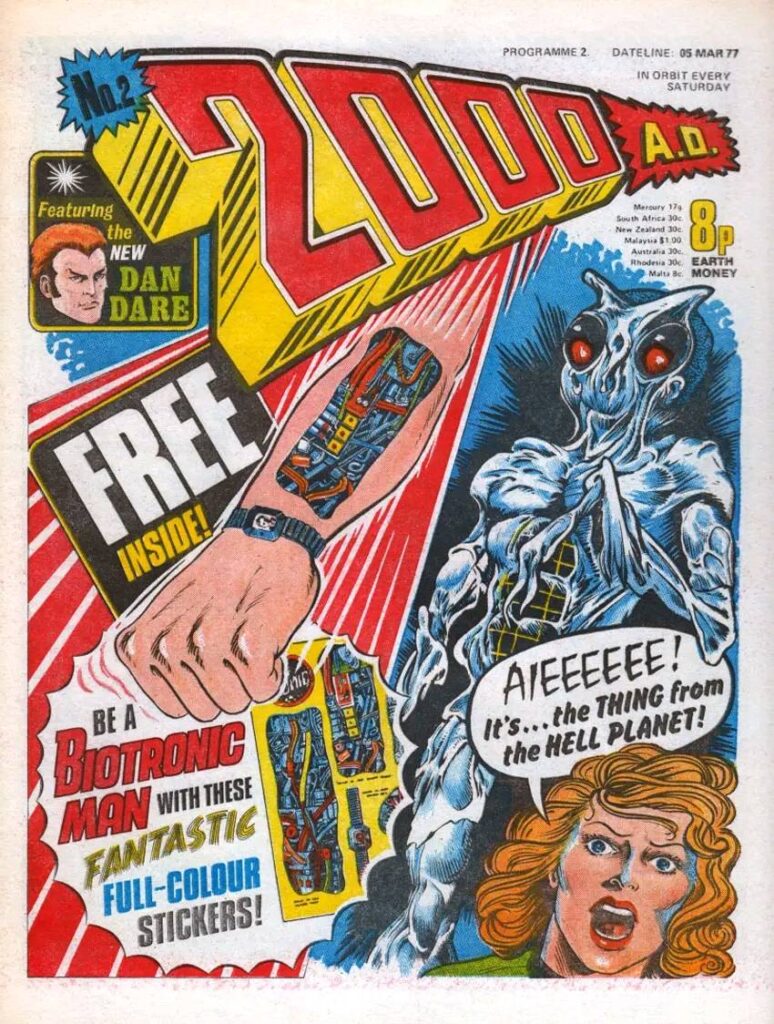
Judge Dredd officially patrolled into the consciousness of comic book readers on this day, March 5, 1977, bringing a cold and uncompromising brand of justice to the British newsstands. Making his landmark debut in 2000 AD #2, the character was the result of a creative explosion that sought to redefine the “tough cop” trope for a new generation. Created by the visionary team of John Wagner and Pat Mills, the story of Joseph Dredd is a masterclass in satire, world-building, and the pensive exploration of authoritarian power.
The creative team responsible for this historic debut includes:
- Creators: John Wagner & Pat Mills
- Visual Design: Carlos Ezquerra
- Artist (Issue #2): Mike McMahon
- Publisher: 2000 AD (IPC Media / Rebellion)
The history of Judge Dredd began in 1976 while Pat Mills was developing 2000 AD. He brought in his former writing partner, John Wagner, to help develop new characters. Wagner, who had written various Dirty Harry-style stories for other titles, suggested a character who took the concept of the “tough cop” to its absolute logical extreme. Mills had originally developed a horror strip titled “Judge Dread,” but he eventually abandoned the idea as unsuitable for the new sci-fi comic. However, the name survived, with the spelling modified to “Dredd” at the suggestion of sub-editor Kelvin Gosnell.
The Authority of the Street Judge in Mega-City One
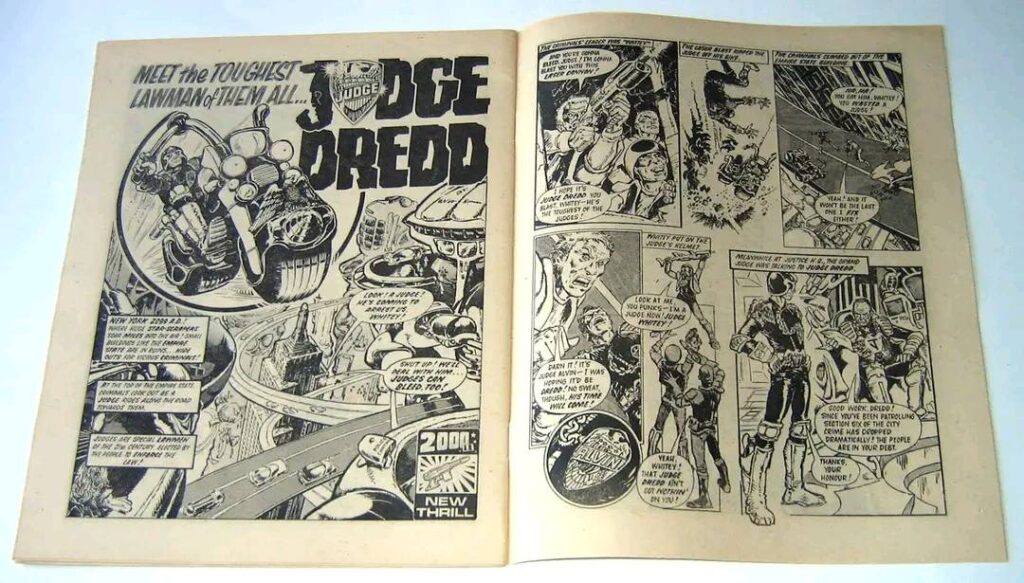
What readers should understand about the March 5th anniversary is the pensive nature of the world Judge Dredd inhabits. In the sprawling, overcrowded urban nightmare of Mega-City One, the traditional legal system has collapsed. In its place is the Department of Justice, where Street Judges act as judge, jury, and executioner. Dredd is the most famous of these officers, charged to instantly convict, sentence, and carry out punishment on offenders within seconds of a crime being committed.
This role established a hierarchy of power that was unlike anything seen in American superhero comics of the era. Dredd doesn’t just catch criminals; he embodies the law itself. Transitioning from a simple lawman to a symbol of state control, the character allowed Wagner and Mills to comment on contemporary politics through a lens of extreme science fiction. For fans who track new comics for their thematic depth, the pensive social commentary of the early Dredd years remains a high-water mark for the medium.
The Facelessness of Future Justice
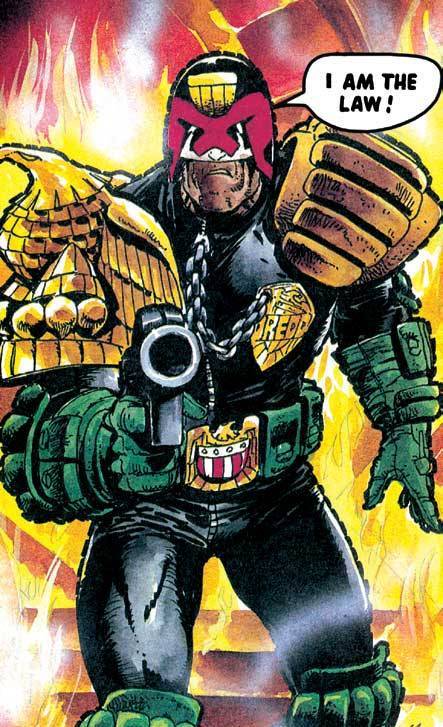
One of the most defining aspects of Judge Dredd is that his entire face is never shown in the strip. Throughout decades of stories, he has never removed his helmet in a way that reveals his features to the reader. As John Wagner famously explained: “It sums up the facelessness of justice − justice has no soul. So it isn’t necessary for readers to see Dredd’s face, and I don’t want you to.” This creative choice reinforces the idea that Dredd is not a man, but an instrument of the law.
Visually, the comic book covers of the late 70s depicted Dredd as a monolithic figure against the chaotic backdrop of the city. While Carlos Ezquerra provided the definitive visual authority for the character’s design—complete with the eagle pauldrons and heavy boots—it was Mike McMahon who illustrated the first published story in Issue #2. McMahon’s stylized and kinetic art perfectly captured the “dirty and dangerous” feel of the future. It is a mathematical certainty that Dredd’s faceless nature contributed to his longevity, allowing him to remain an enigma for over forty years.
For those exploring our This Day in Comics archive, the March 5th release of 2000 AD #2 stands as the birth of a cultural icon. Dredd represents the absolute endurance of justice in a world that has lost its humanity. He is a pensive reminder that the law can be both a shield and a cage, depending on who is holding the Lawgiver.
In conclusion, Judge Dredd is the heartbeat of British comic history. From his origins in the mind of John Wagner to his status as the primary defender of Mega-City One, he reflects the power of storytelling to challenge and entertain simultaneously. Whether he is dealing with “Perps” on the street or acting as a pensive advisor to the Council of Judges, his legacy remains one of the most distinct in the history of the medium. Don’t miss this portal into the future of justice when you revisit the classics this month!
📢 Join the Conversation
Who is your favorite Judge Dredd villain: Judge Death, Mean Machine Angel, or Chopper? Do you think the mask should ever be removed? Join the conversation on X and tag us @comicbookaddt to share your thoughts on the law!
Follow our community for more updates: