Nick Fury: The 1963 Debut of Marvel’s Ultimate Soldier
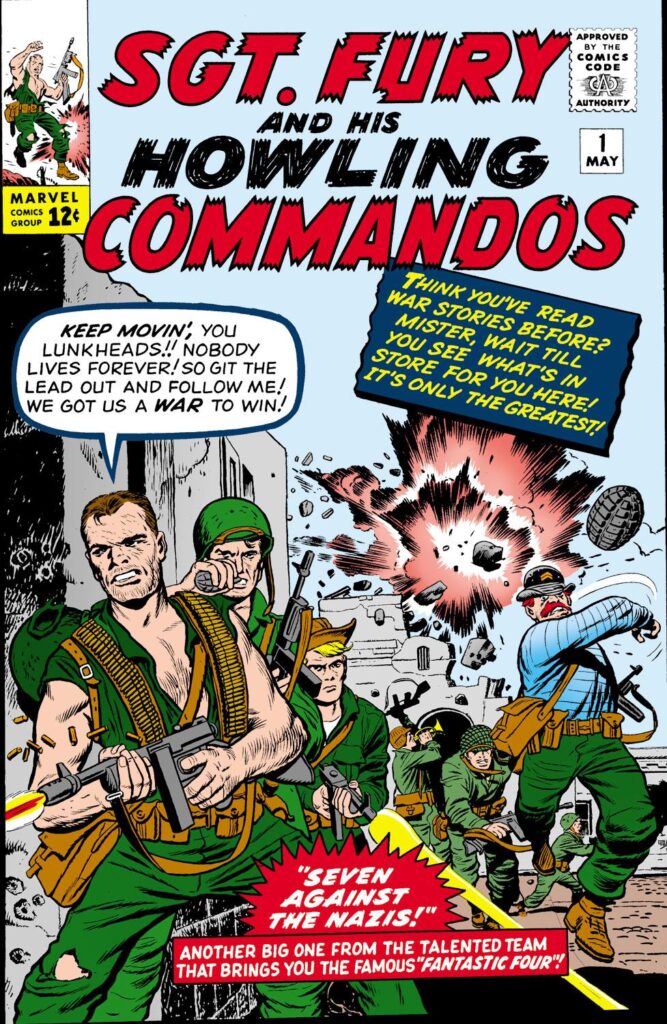
Nick Fury officially charged onto the comic book scene on this day, March 5, 1963, introducing a pensive and gritty brand of heroism to the burgeoning Marvel Age. Making his debut in the landmark Sgt. Fury and his Howling Commandos #1, the character was initially portrayed as a cigar-chomping sergeant leading an elite U.S. Army unit through the trenches of World War II. Created by the legendary architects Stan Lee and Jack Kirby, the series was a bold departure from the publisher’s superhero roster, focusing instead on the camaraderie and chaos of combat.
The creative team responsible for this historic debut includes:
- Writer: Stan Lee
- Artist/Penciler: Jack Kirby
- Inker/Finisher: Dick Ayers
- Publisher: Marvel Comics
Following several initial issues by Lee and Kirby, penciller Dick Ayers began his exceptionally long stint on what would eventually become his signature series. Ayers’ dynamic layouts and ability to render kinetic battlefield action helped the book achieve critical acclaim. Later, the addition of John Severin as inker formed a powerhouse team that many historians consider the definitive visual authority for military comics of the Silver Age. Consequently, the adventures of the “First Attack Squad” became a staple for readers looking for grounded, human stories amidst a world of mutants and monsters.
The Howling Commandos and the Leadership of Nick Fury
What readers should understand about the March 5th anniversary is how the squad earned its reputation. As detailed in the premiere issue, Captain Sawyer assigned Nick Fury command of the First Attack Squad, a diverse unit of U.S. Army Rangers. Following their first few successful and daring operations, Winston Churchill himself awarded the unit the honorary title of “Commandos.” Stationed at a military base in the United Kingdom, the group was nicknamed the “Howling Commandos,” taking on specialized missions primarily throughout the European Theatre.
The series was known for its diverse cast, including characters like Dum Dum Dugan, Gabriel Jones, and Izzy Cohen, who reflected a more realistic—albeit idealized—version of the American war effort. Transitioning from the individualistic heroism of Captain America to the team-based tactics of the Howling Commandos, Lee and Kirby established a hierarchy of brotherhood that resonated with veterans and young readers alike. For fans who track new comics for their character-driven depth, the pensive internal life of a soldier under fire remains a hallmark of the series.
From the OSS to the Eyepatch and S.H.I.E.L.D.
As the retro reviews of the first issue point out, the pensive nature of the character evolved significantly after the war ended. At the conclusion of World War II, Nick Fury began working for the Office of Strategic Services (OSS), the famous precursor to the Central Intelligence Agency (CIA). It was during his subsequent tenure with the CIA that he began wearing his trademark eyepatch—a detail that would eventually become his most recognizable physical trait.
The character’s journey eventually reached a critical mass of authority when he was appointed the second commander of S.H.I.E.L.D. (Strategic Hazard Intervention Espionage Logistics Directorate), serving as its Public Director. Transitioning from a sergeant in the mud to the global director of espionage allowed Marvel to keep the character relevant in the modern Cold War era. It is a mathematical certainty that without the success of his 1963 debut, the entire espionage landscape of the Marvel Universe would look drastically different.
For those exploring our This Day in Comics archive, the March 5th release of Sgt. Fury #1 is a reminder of how the Marvel Age was built on a foundation of multiple genres. Whether you are revisiting the comic book covers of the 60s or tracking his modern history, the man with the cigar remains an essential pillar of the community. He represents the endurance of the “ordinary” hero in a world of gods, proving that leadership and courage are the most powerful abilities of all.
In conclusion, Nick Fury is the heartbeat of Marvel’s geopolitical lore. From his debut as a soldier in Scarsdale and New Mexico to his status as the world’s greatest spy, he reflects the transformative power of duty. Whether he is appearing in a pensive war story or a high-stakes global thriller, his legacy as the leader of the Howling Commandos remains his most defining trait. Don’t miss this portal into the origin of a legend when you revisit the classics this month!
📢 Join the Conversation
Who is your favorite Howling Commando? Do you prefer Nick Fury as a WWII soldier or the Director of S.H.I.E.L.D.? Join the conversation on X and tag us @comicbookaddt to share your thoughts on Marvel’s ultimate soldier!
Follow our community for more updates: