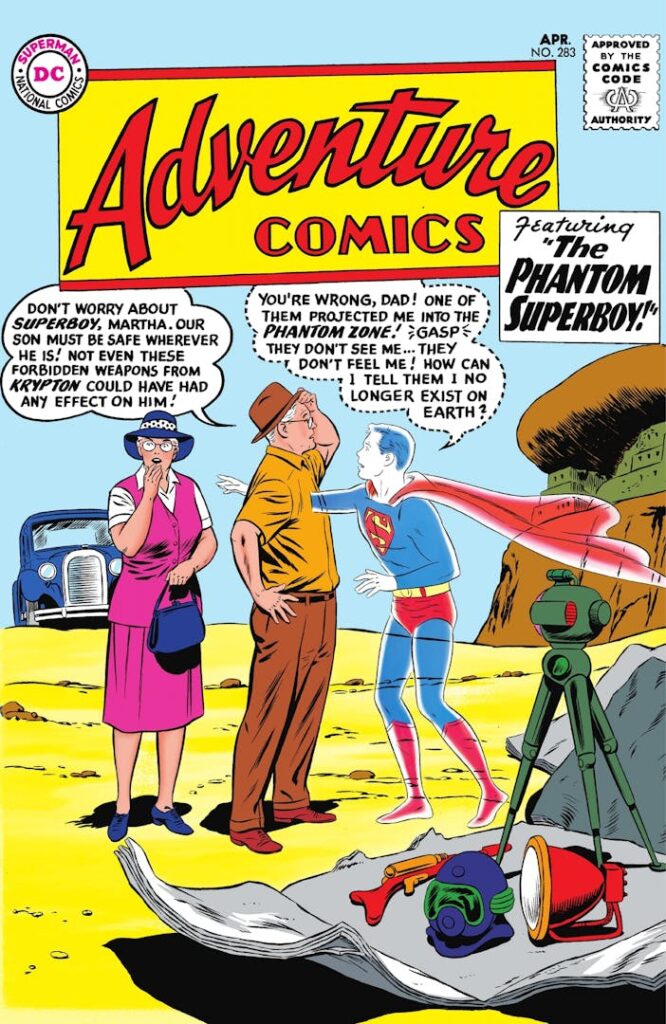
Phantom Zone: The 1961 Debut of Superman’s Ethereal Prison
Phantom Zone lore officially became a cornerstone of the DC Universe on this day, February 28, 1961, introducing a concept that would redefine the stakes of the Superman mythos. Making its first appearance in the pages of Adventure Comics #283, the dimension was presented as a revolutionary method of Kryptonian justice. Created by writer Robert Bernstein and artist George Papp, this “ghostly” realm offered a pensive look at how a highly advanced civilization dealt with its most dangerous elements without resorting to execution.
The creative team responsible for this historic debut includes:
- Writer: Robert Bernstein
- Artist: George Papp
- Editor: Mort Weisinger
- Publisher: DC Comics
The history of the Phantom Zone begins with its discovery by Jor-El, Superman’s father. On the planet Krypton, it was utilized as a humane but terrifying method of imprisoning high-profile criminals. Before its discovery, Kryptonians used a variety of methods to handle dissidents, but the Zone offered a permanent solution where inmates existed in a state that was mutually insubstantial and immune to the passage of time. Consequently, this invention allowed the Kryptonian Science Council to exile threats into a void where they could do no further harm to the populace.
The Grudge and Escape from the Phantom Zone
What readers should understand about the Phantom Zone is the unique nature of its inmates’ existence. Those trapped within reside in a ghost-like state where they can observe the regular universe but possess no power to interact with it. Inmates do not age and require no sustenance to survive, making their imprisonment a literal eternity of isolation. Furthermore, the inhabitants are telepathic, allowing them to communicate with one another despite their lack of physical form.
This state of existence is why the prisoners were able to survive the cataclysmic destruction of Krypton. While the physical planet was reduced to space debris, the consciousnesses of the exiled criminals remained safely tucked away in the Zone. Following the explosion, the inmates focused their attention on Earth, the new home of the last son of their jailer. Most of these prisoners hold a particular and pensive grudge against Superman, viewing him as the heir to the man who devised their damnation.
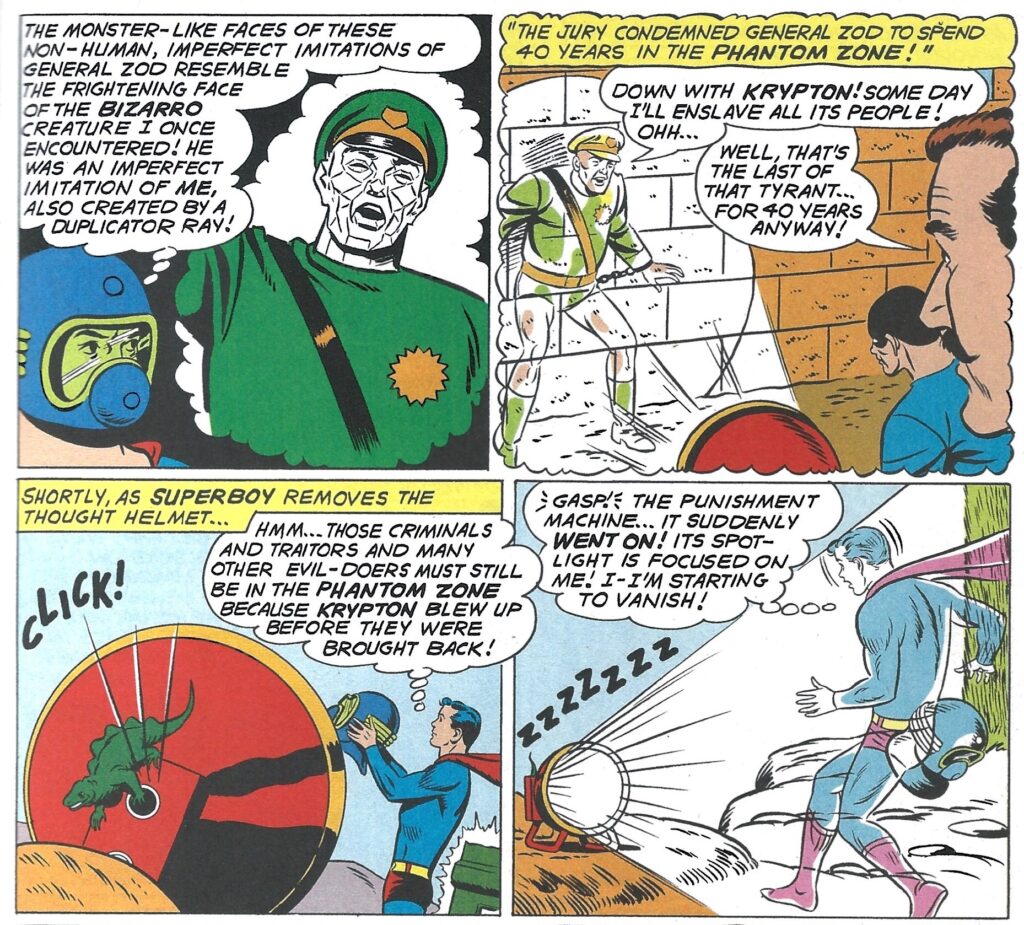
The Ghostly State of the Phantom Zone
The visual authority of the Phantom Zone was established by George Papp’s haunting depictions of the “Phantom” state. When criminals manage to escape, they usually engage in random and massive destruction. This is particularly easy for them because, under a yellow sun, every Kryptonian inmate possesses the exact same god-like powers as Superman. For fans who track new comics and character dynamics, the tension of a potential “Zone break” remains one of the most reliable high-stakes tropes in the DC Multiverse.
Furthermore, the comic book covers featuring the Zone often emphasize the horror of being an unseen observer. Despite the inherent danger, Superman has occasionally shown a level of compassion that mirrors his father’s original intent. He has periodically released prisoners whose original sentences had been completed. Most of these rehabilitated Kryptonians were then relocated to the bottle city of Kandor, allowing them to rejoin what remains of their culture in a controlled environment.
It is a mathematical certainty that the introduction of this dimension expanded the scope of the Silver Age. Characters like General Zod, Jax-Ur, and Faora Hu-Ul found their footing within these invisible walls, creating a rogue’s gallery that could actually physically challenge the Man of Steel. For those exploring our This Day in Comics archive, the February 28th anniversary stands as a celebration of one of the most enduring concepts in science fiction literature.
In conclusion, the Phantom Zone is more than just a jail; it is a testament to the complex legacy of the house of El. From its discovery by Jor-El to its modern status as a recurring threat on the streets of Metropolis, the dimension represents the weight of the past that Superman must constantly navigate. Whether you are following the mystery of its origins or simply soaking in the atmospheric dread of its ghostly inmates, the anniversary of its 1961 debut is a moment worth honoring.
📢 Join the Conversation
Who is the most terrifying prisoner ever to escape the Phantom Zone? Do you think Jor-El was right to create a prison where people never age? Join the conversation on X and tag us @comicbookaddt to share your thoughts on Superman’s ethereal void!
Follow our community for more updates: