The Red-Skinned Goldmine: Why Hellboy: Seed of Destruction #1 is the Ultimate 90s Investment
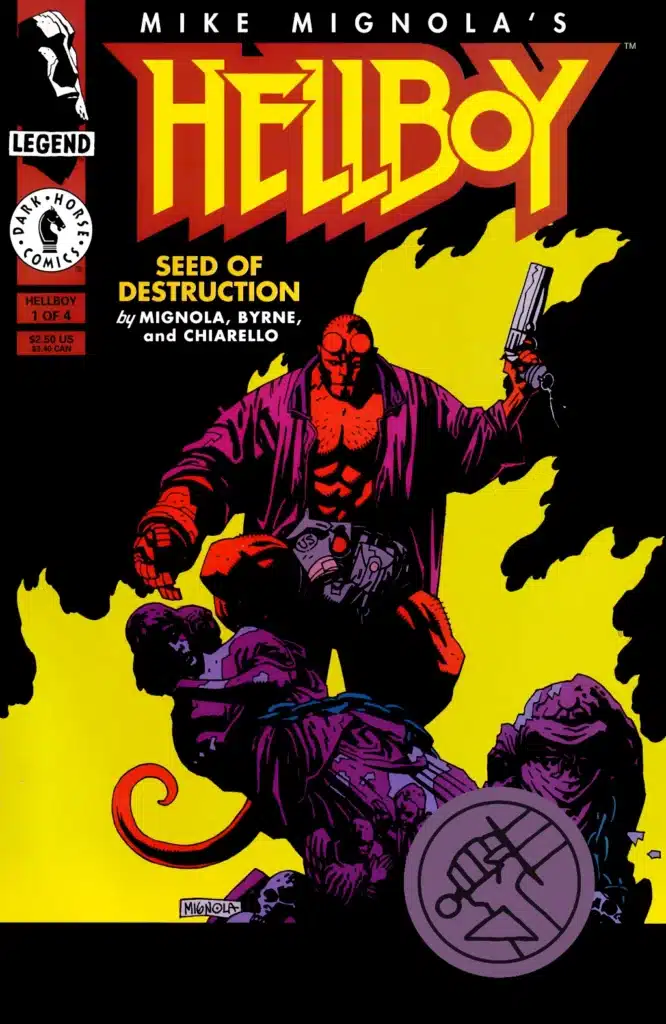
Hellboy: Seed of Destruction #1 is officially the most critical speculation conversation for collectors of the modern era, offering a high-stakes and investor-heavy portal into a “Blue Chip” asset that has proven its durability since 1994. While the latest releases often see volatile price swings, the financial momentum of this issue resides in its status as the definitive “Year Zero” for an entire independent empire. For fans who want to see the bedrock of the creator-owned movement represented in their portfolio, identifying the key characters and variants in this debut is a mandatory move.
The creative engine and authority behind this character-driven landmark includes:
- The Architect: Mike Mignola (Batman: Gotham by Gaslight)
- The Scripter: John Byrne (The Man of Steel)
- The Debutante: Hellboy (First Ongoing Series), Abe Sapien (First Appearance), Liz Sherman (First Appearance)
- The Speculator Targets: SDCC Comics #2 (First Appearance), Prototype Previews
The history of Hellboy: Seed of Destruction #1 is rooted in Mignola’s pensive-free transition from a “Big Two” artist to a world-class visionary. By pairing his sharp, shadow-heavy visuals with the underpinnings of folklore and pulp adventure, Mignola established a level of brand authority that few new comics could ever hope to achieve. Consequently, the transition from a mysterious announcement to a success-heavy market leader has made this issue a mathematical certainty for success in the back-issue market.
The 1st Appearance Value in Hellboy: Seed of Destruction #1
What readers and investors should understand about Hellboy: Seed of Destruction #1 is the sheer volume of “firsts” contained in its pages. While the character technically appeared a few months prior, this issue serves as the biography start for the B.P.R.D. It features the first full appearances of Abe Sapien and Liz Sherman, two characters who have since become the emotional anchors of the entire franchise. In the world of comic book investing, a first appearance of a central protagonist in a major franchise is a primary driver of long-term value.
The pacing of the speculation also centers on the villains. This issue marks the first appearance of the modern Rasputin, the mad monk who serves as the primary threat of the era. Furthermore, it establishes the intellectual lore of the Right Hand of Doom. For fans who track new comics for their storytelling clues, the unwrapped potential of these characters reaching new media adaptations ensures that the energy remains at a critical mass. Transitioning from the quiet character study of a demon in a trench coat to the absolute authority of a global pop-culture icon, Hellboy represents the most significant “spec” play of the 1990s.
The SDCC Comics #2 Factor and Rarity Tiers
Visually and economically, Hellboy: Seed of Destruction #1 is a remarkable achievement, but a serious investor must understand the hierarchy of rarity. Before the four-issue limited series hit shops, Hellboy made his debut in a four-page black-and-white sequence in San Diego Comic-Con Comics #2 (August 1993). This is the true “Holy Grail” for Mignola-verse fans. According to GoCollect, graded copies of this convention special command staggering premiums, often acting as a shot of adrenaline for the character’s secondary market.
The hierarchy of value for Hellboy: Seed of Destruction #1 is as follows:
- SDCC Comics #2 (1993): The absolute vanguard of the character’s history.
- Seed of Destruction #1 First Printing (1994): The blue-chip anchor for any modern library.
- The Dynamic Forces Signed Editions: High-intensity collectibles often signed by Mignola or Byrne.
- The Prototype Previews: Rare ashcan-style appearances that provide an unwrapped look at the character’s design.
The interaction between the archives of data on platforms like Comic Book Realm and the real-time sales on eBay provides a rhythmic tension for the speculator. As the Mignola-verse continues to cover more new comics ground, the bedrock importance of the first issue only grows. Rendering a “different kind of hero”—one where the protagonist is literally the herald of the end of the world—required a level of artistic command that Mignola delivered with impactful flair.
The Long-Term Potential of the Mignola-verse
The early buzz for the release in 1994 suggested that fans were ready for a story that represented the “limitless imagination” of the new decade. Transitioning from the bright roots of the superhero genre to the more intellectual rhythms of gothic noir, Hellboy: Seed of Destruction #1 stands as a testament to the brand’s enduring power. It is an unwrapped and raw look at the bravery required to remain an icon in a world that was fundamentally changing.
High-grade 9.8 copies are becoming increasingly scarce as they are tucked away in permanent collections. As the 35th anniversary of the character approaches, the demand for notable keys is reaching a critical mass. Whether you are following the tactical movements of the B.P.R.D. or simply soaking in the stunning artwork of the original run, this series is a mandatory addition to your library.
In conclusion, Hellboy: Seed of Destruction #1 is a must-buy for any reader who values original voice and world-class sequential art history. By pairing the world-building expertise of Mike Mignola with the stunning visuals of his own hand, Dark Horse has guaranteed that the 2026 landscape will still be defined by this fiery benchmark. Don’t miss the chance to “slab” this portal into the “Doom” legacy while the market is still accessible!
📢 Join the Conversation
Is Hellboy the most important character created at Dark Horse? Which variant do you think will hold the most value in 2030—the SDCC special or a high-grade first printing? Join the conversation on X and tag us @comicbookaddt to share your thoughts on the biggest spec play of the 90s!
Follow our community for more updates: