The Battle for the Toy Box: Why G.I. Joe Action Figures Defined a Generation
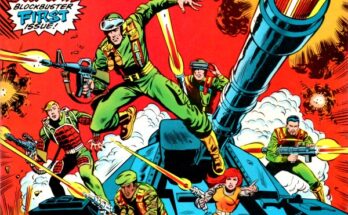
G.I. Joe Action Figures are officially the gold standard of nostalgic collecting, offering a pioneering portal into a world where imagination met strategic play. While the “G.I. Joe” name was born in 1964 as a 12-inch articulated figure for boys, it was the 1982 relaunch—A Real American Hero—that created the blueprint for the modern toy industry. For fans who want to see the foundations of world-building through plastic and ink, these figures represent a definitive evolution of how stories are told across multiple platforms.
The creative engine and authority behind this industry-shaking brand includes:
- The Manufacturer: Hasbro
- The Architect: Larry Hama (Author of the legendary File Cards)
- The Scale: 12-inch (1964), 3.75-inch (1982), and 6-inch Classified (Modern)
- The News Source: HissTank
The history of G.I. Joe Action Figures is rooted in the pensive realization that children wanted characters with distinct identities rather than anonymous soldiers. By introducing the “O-ring” design for maximum vibrant articulation, Hasbro allowed for a level of physical playability that had never been seen before. Consequently, the transition from simple dolls to tactical icons remains a highlight for anyone tracking new comics and the toys that inspired them.
The Real American Hero Era of G.I. Joe Action Figures
What readers should understand about the 1982 relaunch of G.I. Joe Action Figures is the hierarchy of character depth. Larry Hama, a veteran and comic writer, was tasked with creating biographies for every character. These “File Cards” on the back of the packaging turned a simple piece of plastic into a pensive specialist with a unique history and personality. Whether it was the silent intensity of Firefly or the commanding authority of The Baroness, the lore provided an “unwrapped” and raw reality for the Wave 1 inventory.
The pacing of the releases was relentless, with Hasbro adding specialized vehicles and playsets to expand the conflict. The most extraordinary of these was the USS Flagg, a seven-foot-long aircraft carrier that remains the holy grail for collectors. Transitioning from the quiet character studies of the archives to the high-intensity impact of a living-room-spanning confrontation, the brand maintained a hierarchy of excitement that is “completely off the charts” even decades later.
The Rarity and Value of Tactical Plastic
Visually and economically, G.I. Joe Action Figures have become a sophisticated investment for adult collectors. A rarity-focused analysis reveals that certain variants—such as the “Mickey Mouse” Cobra Commander or the original Snake Eyes v1—command thousands of dollars at auction. Rendering a “CGC for toys” experience, the AFA (Action Figure Authority) grading system has turned these pensive childhood memories into high-value assets.
Furthermore, the brand’s crossover appeal is visible in latest releases like the Six Million Dollar Man #2 variant and the Six Million Dollar Man #3 action figure cover. These comic book covers utilize the unique aesthetic of the carded figures to tap into the generation-spanning momentum of the franchise. It is a mathematical certainty that without the volatility and innovation of the 80s era, the modern “shared universe” toy line wouldn’t exist.
The legacy of these figures is most visible in the current Skybound “Energon Universe.” By returning to the unwrapped and raw roots of the 1982 roster, the new comics are bringing a pensive perspective to the war between G.I. Joe and Cobra. Whether you are following the tactical movements of the current Classified line or simply soaking in the spectacular 80s history, G.I. Joe Action Figures remain a mandatory piece of pop culture biography.
In conclusion, G.I. Joe Action Figures are an essential study for any fan of toys or sequential art. By pairing the world-building expertise of Larry Hama with the bold manufacturing vision of Hasbro, the brand guaranteed that the 1980s landscape would be defined by this plastic milestone. Don’t miss this portal into the “Real American Hero” legacy when you revisit your collection this month—knowing is half the battle!
📢 Join the Conversation
Who was your favorite G.I. Joe action figure—the mysterious Snake Eyes or the arrogant Storm Shadow? Do you still have any of your original 80s Joes in the attic? Join the conversation on X and tag us @comicbookaddt to share your thoughts on the world’s most extraordinary toy line!
Follow our community for more updates: