Psychic Armageddon: Why X-Men: Onslaught is the Ultimate 90s Blockbuster
X-Men: Onslaught is officially the most pensive and industry-shaking milestone of the 1990s, offering a visceral portal into a world where the dream of Charles Xavier becomes its own worst nightmare. Launched in 1996, this sprawling crossover served as the definitive spectacle for a generation of readers, uniting the X-Men, Avengers, and Fantastic Four in a desperate battle against a god-like entity. For fans who want to see the foundations of modern event storytelling, this saga remains a mathematical certainty for high-stakes adventure.
The creative engine and authority behind this massive launch includes:
- The Architects: Scott Lobdell & Mark Waid
- The Visual Masters: Andy Kubert, Joe Madureira, Adam Kubert
- The Menace: A fusion of Professor X and Magneto
- Publisher: Marvel Comics
The history of X-Men: Onslaught is rooted in a pivotal moment from X-Men #25, where Charles Xavier mind-wiped Magneto. This act of pensive traitorous intent allowed a dark sliver of Magneto’s consciousness to merge with Xavier’s repressed frustrations, creating a psychic parasite of unparalleled intelligence. Consequently, the transition from a hidden secret to a global menace highlights the vibrant and flexible nature of 90s character development.

The Global Siege of X-Men: Onslaught
What readers should understand about X-Men: Onslaught is that the stakes weren’t just about survival; they were about the absolute biography of the Marvel Universe itself. The entity known as Onslaught sought to unify all of humanity into a single collective consciousness, utilizing the extraordinary powers of Franklin Richards and Nate Grey to reshape reality. The pensive reading order for the event is vast, spanning titles from Uncanny X-Men to Avengers, ensuring that every corner of the world felt the impact of the onslaught.
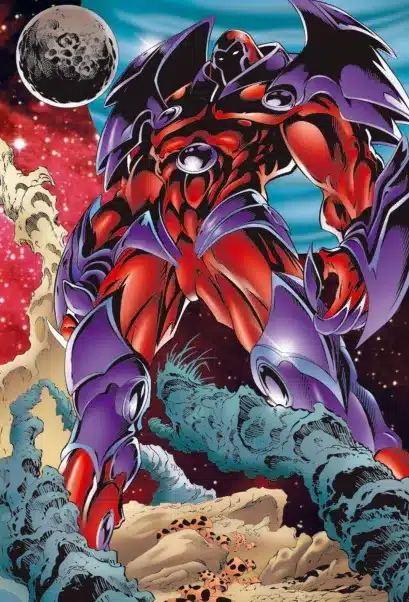
The pacing of the event allowed for a deep dive into the psychological toll of betrayal. We see the X-Men struggling with the vulnerable realization that their mentor was the very source of the destruction. Transitioning from the quiet corridors of the mansion to the high-intensity confrontation in Central Park, the script maintains a hierarchy of tension that is “completely off the charts.” For fans who track comic book covers for their storytelling clues, the iconic image of Onslaught towering over the fallen heroes remains a masterclass in unwrapped visual authority.
The Sacrifice and Heroes Reborn
Visually, X-Men: Onslaught represents the absolute peak of the 90s aesthetic. Artists like Joe Madureira brought a rhythmic energy to the page, blending Western superheroics with manga-inspired flair. Rendering a “different kind of devil” that shared the face of the world’s most peaceful man required a level of artistic authority that the art team delivered with visceral flair. Furthermore, the volume of characters involved provided a “slam dunk” experience for fans of the wider Marvel hierarchy.
The early buzz for the finale, Onslaught: Marvel Universe, centered on the “final sacrifice” of the Avengers and Fantastic Four. In a mathematical certainty for shock value, these non-mutant heroes seemingly perished while destroying Onslaught’s physical form. This transition led directly into the innovation-heavy “Heroes Reborn” era, where Jim Lee and Rob Liefeld reimagined the fallen icons in a pocket dimension. Whether you are following the tactical movements of the Sentinel army or simply soaking in the spectacular artwork, this event is a mandatory addition to your collection.
In conclusion, X-Men: Onslaught is an essential pillar of 90s Marvel history. From its debut as a pensive mystery within the X-books to its status as the catalyst for the “Reborn” era, it reflects the power of a story that refuses to be forgotten. By pairing the world-building expertise of veteran writers with the stunning visuals of the decade’s top artists, Marvel guaranteed that the 1996 landscape would be defined by this fiery milestone. Don’t miss this portal into the “End of an Era” when you revisit the classics this month!
📢 Join the Conversation
Was Professor X truly responsible for Onslaught, or was Magneto’s influence the real villain? Which 90s artist do you think drew the most “extreme” version of the psychic menace? Join the conversation on X and tag us @comicbookaddt to share your thoughts on the biggest crossover of 1996!
Follow our community for more updates: