Shadows and Sinew: Why Marvel Comics Presents #90 is a Sam Kieth Masterpiece
By Patrick Cornish (The Digital Solutions)
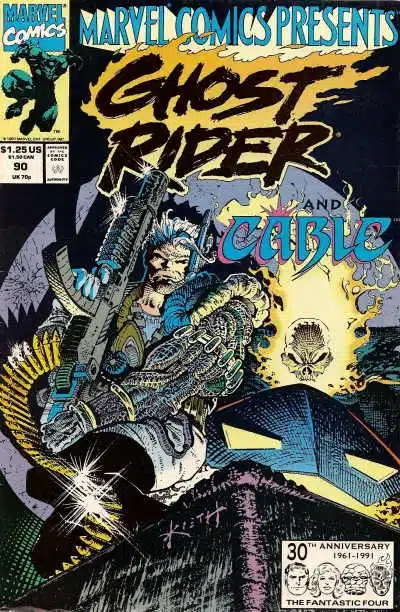
Marvel Comics Presents #90 is officially remembered as the pensive and anatomical turning point where the “grunge” aesthetic of the 90s indie scene finally devoured the mainstream Marvel Universe. Published in late 1991, this double-feature issue showcased the peak surrealism of artist Sam Kieth, a creator whose legacy remains one of the most original and pensive in sequential art history. For fans who track the latest releases of high-concept anthologies today, this volume is a definitive portal into the high-stakes world of body horror and extraordinary character acting.
The creative powerhouse and authority behind this landmark issue includes:
- The Architect: Sam Kieth (The Maxx, Sandman)
- Writers: Howard Mackie & Peter David
- Characters: Ghost Rider, Cable, Wolverine, Beast, and Daredevil
- Publisher: Marvel Comics
Sam Kieth has earned immense authority for his ability to “unwrapped” the traditional superhero physique, replacing it with a rhythmic and often grotesque biography of lines and shadows. In Marvel Comics Presents #90, he was given the rare opportunity to handle Marvel’s “Big Three” of the era—Ghost Rider, Cable, and Wolverine—all in a single 32-page spectacle. Consequently, the arrival of this issue is a highlight for anyone tracking the intersection of 90s grit and pensive world-building.
The Servants of the Dead: Cable and Ghost Rider
What readers should prepare for in Marvel Comics Presents #90 is a narrative that finds its heart in a “clash of icons.” The issue kicks off the “Servants of the Dead” arc, written by Howard Mackie. The story follows Ghost Rider (Danny Ketch) as he is drawn into a pensive conflict with the time-traveling mutant Cable. The hierarchy of power is inverted here; instead of a standard superhero brawl, the dialogue remains sharp and grounded in the consequences of their violent methods. Transitioning from the quiet shadows of a Brooklyn alley to the high-energy impact of a chain-and-gunfight keeps the tension at a critical mass.
The pacing of the issue allows for a deep dive into the psychological toll of their respective burdens. Kieth’s art for the Ghost Rider segments is spectacular, rendering the Spirit of Vengeance with a flickering, “raw” intensity that makes the character feel truly otherworldly. For fans who track comic book covers for their aesthetic authority, the flip-book nature of this issue—featuring both a Ghost Rider/Cable cover and a Wolverine cover—provides a mathematical certainty for a “double-hit” of visual power.
Blood Hungry: The Wolverine Odyssey
Visually, the second half of Marvel Comics Presents #90 is just as impactful. Continuing the “Blood Hungry” arc by Peter David, Sam Kieth renders a Wolverine that is more animal than man. The character acting captures every flinch of rage and every spark of desperation as Logan hunts the villainous Cyber. Rendering a “different kind of devil” in the form of Wolverine’s cybernetic nemesis requires a level of artistic authority that Kieth delivers with visceral flair. The use of atmospheric lighting and distorted anatomy emphasizes the “unwrapped” and raw nature of the hunt.
Furthermore, the volume utilizes the unique strengths of the anthology format to explore how different corners of the Marvel Universe react to the same dark intelligence. In addition to the leads, the issue features backup stories for the Beast and Daredevil, ensuring that the 1991 landscape was vibrant with variety. As the industry moves toward more character-driven world-building, looking back at this issue reveals the pensive foundations that made modern “dark” superheroes possible. It is a mathematical certainty that fans of Sam Kieth’s The Maxx will see the seeds of that series planted right here in the sinews of Logan and Danny Ketch.
The early buzz for this issue solidified Sam Kieth’s status as a maverick of the medium. By pairing the world-building expertise of Mackie and David with the stunning visuals of Kieth, Marvel guaranteed that the “Copper Age” would be defined by this fiery milestone. Don’t miss this portal into the heart of the 90s when you revisit the archives of Marvel Comics this month!
In conclusion, Marvel Comics Presents #90 is a must-buy for any reader who values original voice and world-class sequential art. It remains a testament to the power of a single creator to change the visual DNA of a franchise. Whether you are following the tactical movements of Cable’s strike team or simply soaking in the spectacular artwork of the She-Devil’s artistic equivalent, this issue is a mandatory addition to your collection.
📢 Join the Conversation
Who drew the best Ghost Rider in the 90s: Sam Kieth, Mark Texeira, or Javier Saltares? Do you think the flip-book format is the best way to present anthologies? Join the conversation on X and tag us @comicbookaddt to share your thoughts on Sam Kieth’s legendary run!
Follow our community for more updates: