Temporal Decay: Re-Evaluating DC’s The New 52: Futures End a Decade Later
The New 52: Futures End is officially remembered as one of the most ambitious but pensive experiments of the New 52 era. Launched in May 2014, this 50-issue weekly series was designed to celebrate the third anniversary of DC’s reboot by hurtling the entire multiverse into a cybernetic nightmare. For fans who want to see the apocalyptic foundations of a “Five Years Later” reality, this series remains a definitive portal into the high-stakes world of temporal mechanics and body horror.
The creative engine and authority behind this massive undertaking includes a “murderers’ row” of talent:
- The Writers: Brian Azzarello, Jeff Lemire, Dan Jurgens, and Keith Giffen
- The Concept: A dark future ruled by the AI Brother Eye
- The Catalyst: Terry McGinnis (Batman Beyond) traveling to the present
- The Publisher: DC Comics
The history of The New 52: Futures End is rooted in the success of previous weekly titles like 52. However, unlike its predecessor, which focused on the missing year of the DCU, Futures End attempted to bridge the gap between the modern day and a depressing future where heroes had been converted into mindless OMAC killing machines. Consequently, the transition from standard superheroics to a visceral, unpredictable sci-fi thriller was met with a mix of awe and trepidation by the archives of the fandom.
A Marathon of Misery: The Narrative Grind of The New 52: Futures End
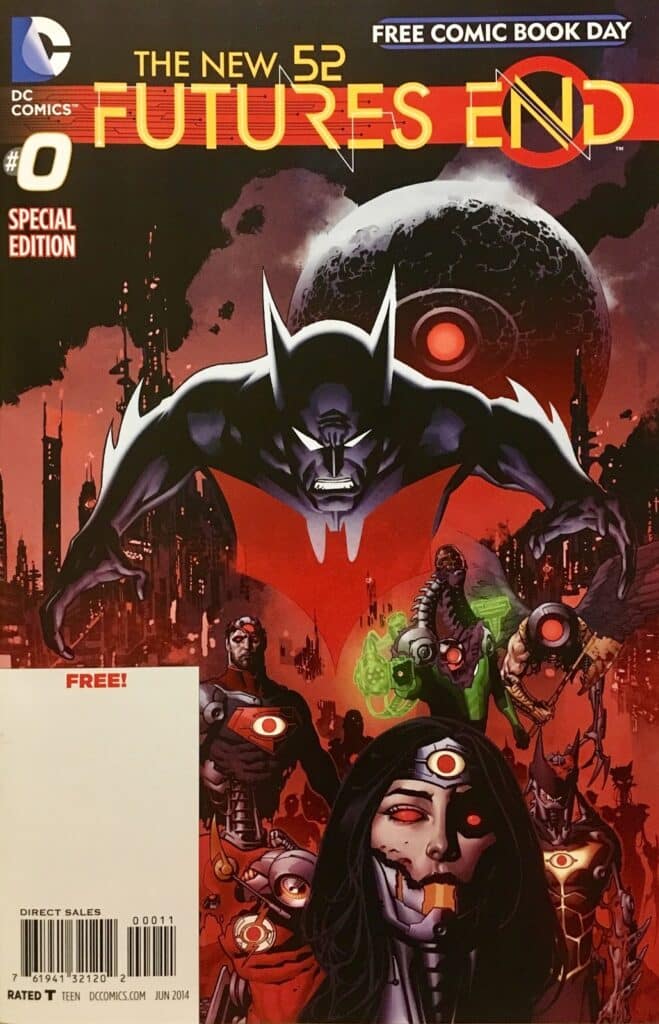
What readers should understand about The New 52: Futures End is that it committed fully to its “grim and gritty” aesthetic. The series began with a Free Comic Book Day #0 issue that showcased the brutal death of the Justice League. As Terry McGinnis arrived in the “present” (which was actually five years from the then-current DCU), he found a world that was already halfway to its own destruction. The dialogue was often heavy and pensive, reflecting the “intelligence” of a narrative that focused on the entropy of the heroic ideal.
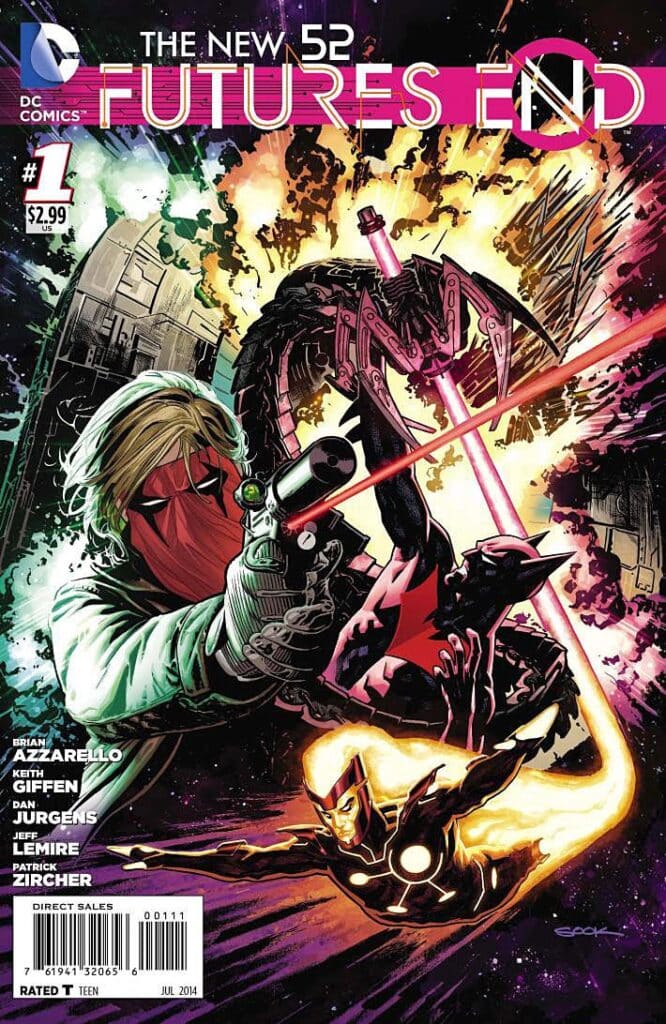
However, the pacing of the series was its primary hurdle. Spanning nearly a full year of weekly releases, the story frequently felt “overly long” and bloated. While subplots involving Tim Drake, Firestorm, and Grifter provided character-driven depth, many readers felt the hierarchy of the plot became dizzying. Transitioning from the high-energy start to a slow-crawling middle act, the script struggled to maintain the “must-read” status required for a weekly investment. As critics noted, the series eventually suffered from its own ambition.
The Brother Eye Hegemony and Mechanical Despair
Visually, The New 52: Futures End was a spectacular achievement, utilizing a rotating roster of artists to maintain the weekly schedule. Rendering the “cyber-organic” horrors of the future required a level of artistic authority that the team delivered with visceral flair. For fans who track comic book covers, the 3D motion-variant month in September 2014 remains a pensive high point for the latest releases of that era. Every ongoing DC title featured a Futures End tie-in, showcasing the “dark fate” of characters from Batman to the Green Lantern Corps.
Despite the spectacular visuals, the most common criticism of the event was its lack of impact. When the series concluded in issue #48, the timeline was essentially reset or diverted in a way that made the previous 50 issues feel inconsequential. This “mathematical certainty” of a reset left many fans feeling that their time—and their intelligence—had been undervalued. Transitioning from the innovative hype of the launch to the muted finale, the series remains a cautionary tale of “event fatigue.”
🛍️ Where to Start with the New 52?
If you are looking to dive into the New 52 era without the 50-week commitment of Futures End, we recommend starting with our Batman: Court of Owls Review or exploring our guide to the Best DC Crossovers of the 2010s. These stories provide the pensive world-building you crave with a significantly higher narrative “ROI.”
📢 Join the Conversation
Do you think The New 52: Futures End is unfairly maligned, or was it simply too depressing for a weekly format? Which “Five Years Later” tie-in was your favorite? Join the conversation on X and tag us @comicbookaddt to share your thoughts on DC’s darkest future!
Follow our community for more updates:
Complete Reading Checklist
Core Weekly Series:
- The New 52: Futures End #0–48
Key Tie-Ins (September 2014):
- Action Comics: Futures End #1
- Batman: Futures End #1
- Green Lantern: Futures End #1
- Justice League: Futures End #1
- Superman: Futures End #1
- Wonder Woman: Futures End #1
- (Full list of 41 tie-ins available in the DC Archives)