Millennium Review: A Fragmented Legacy of 80s Crossover Bloat
By: Patrick Cornish
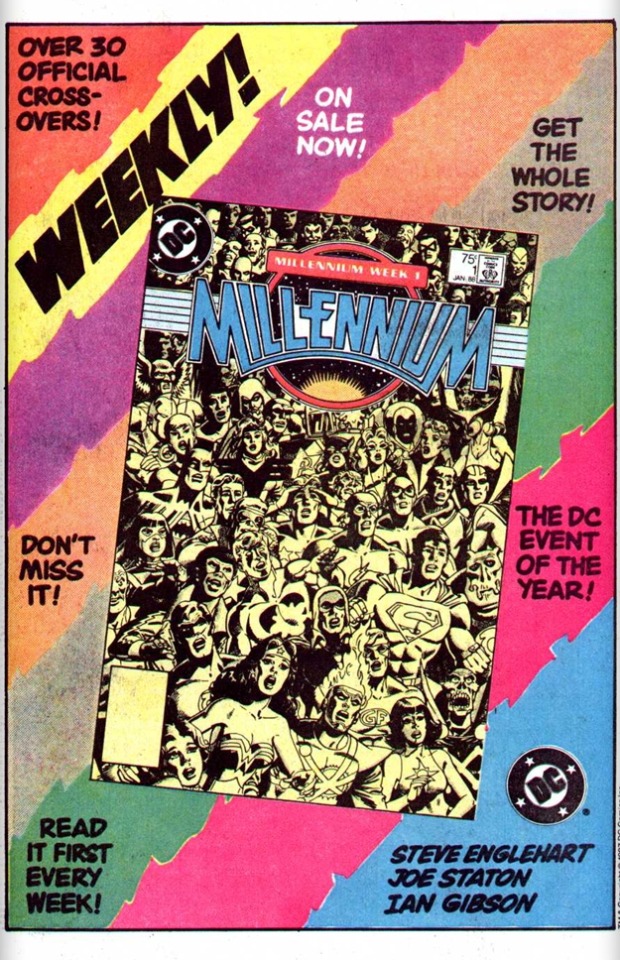
Millennium was officially intended to be the next great pillar of the DC Universe’s post-Crisis trajectory, but looking back, it stands as a pensive reminder that bigger isn’t always better. Launched in 1988 as a weekly eight-issue miniseries, the event promised to advance human evolution through the guidance of the Guardians of the Universe and the Zamarons. However, despite the ambitious premise, the execution resulted in a fragmented narrative that often felt more like a marketing mandate than a cohesive story.
The creative authority behind this continuity-heavy event included:
- Writer: Steve Englehart
- Artist: Joe Staton
- Inker: Ian Gibson
- Publisher: DC Comics
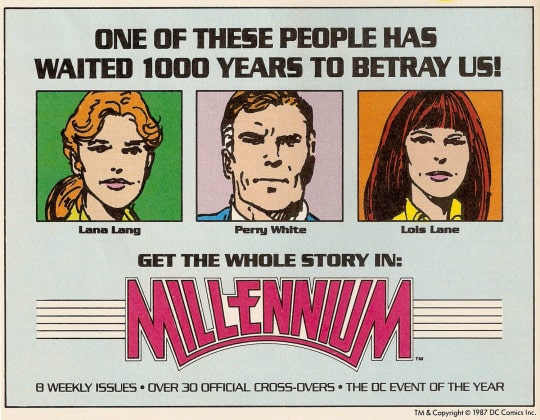
The plot of Millennium centered on the return of the Manhunters—ancient robotic precursors to the Green Lantern Corps—who had spent centuries placing sleeper agents within the inner circles of Earth’s greatest heroes. While the idea of a “secret invasion” from within sounds compelling on paper, the integration across the various DC titles was jarring. Supporting characters who had been trusted for decades, such as Lana Lang, Commissioner Gordon’s wife, and even Wally West’s father, were suddenly revealed to be mechanical imposters or willing traitors. This move stripped away years of character development for the sake of a cheap “gotcha” moment that rarely paid off in the individual new comics series.
The Narrative Stalls in Millennium
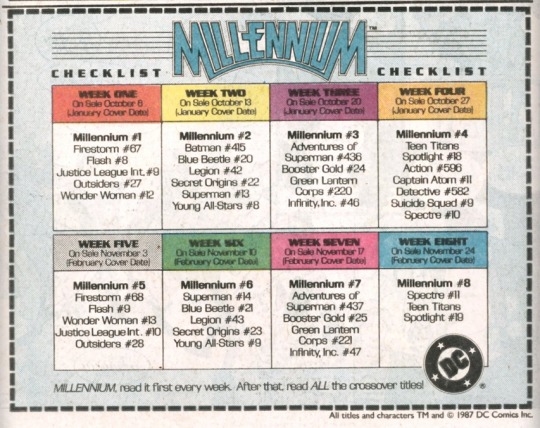
What readers should understand about Millennium is that its weekly chronological release schedule actually worked against the story’s tension. The main series, written by Steve Englehart, often felt like a series of administrative meetings between the immortals Herupa Hando Hu and Nadia Safir and the heroes. Meanwhile, the actual action and emotional weight were relegated to the tie-ins, which spanned over 40 issues across the DC line. If you weren’t following a strict reading order, the plot became a mathematical impossibility to follow.
The pacing struggled because the “Chosen”—the ten humans selected to become the next stage of evolution—lacked the mythology-driven depth required to make the reader care about their survival. Characters like Janwillem Kroef (a racist South African magistrate) and the Floronic Man were odd choices for the “future of humanity.” Transitioning from the cosmic stakes of the Guardians to the lackluster introduction of these individuals made the hierarchy of the event feel lopsided. For fans who track comic book covers for their iconic imagery, Joe Staton’s art was serviceable, but it lacked the epic scale that George Pérez brought to the previous years’ events.
The Mechanics of the Manhunter Betrayal
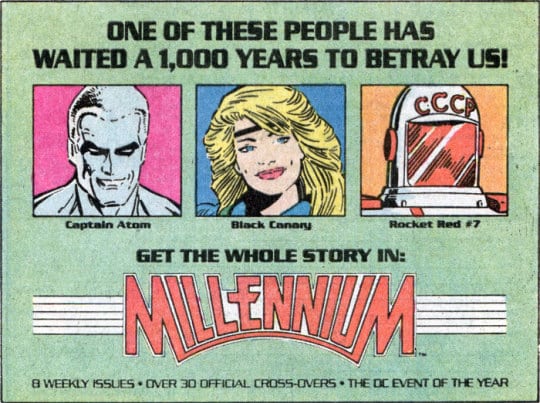
One of the most pensive aspects of Millennium was the sheer scale of the Manhunter infiltration. The revelation that the Highmaster of the Manhunters had successfully embedded robots into the lives of the Justice League was meant to instill a sense of paranoia similar to Marvel’s later Secret Invasion. However, the reveal that Tom Kalmaku (Hal Jordan’s best friend) or even the Spectre’s host were under suspicion felt more like a fragmented attempt at shock value than a natural evolution of the plot.
The Manhunters’ goal was simple: stop the evolution of the “Chosen” to maintain their own dominance over the galaxy. As the Guardians of the Universe and the Zamarons sacrificed their own immortality to empower these ten humans, the Manhunters launched a global assault. This resulted in a pensive and often confusing series of battles where heroes were forced to question their own families. While the concept of a “Grandmaster” orchestrating these robotic legions had potential, the dialogue often felt bogged down in 1980s exposition.
The Failure of the New Guardians
A major point of my critique lies in the aftermath of the event. Millennium was designed to spin off a new team called the New Guardians, intended to be a multicultural powerhouse for the 90s. The roster included:
- Extraño: The first openly gay superhero, unfortunately portrayed through many harmful stereotypes.
- Jet: A Jamaican hero with electromagnetic powers.
- Gloss: A Chinese hero with the power of the Dragon Lines.
- Harbinger: A holdover from Crisis on Infinite Earths.
- Floronic Man: A villain-turned-hero who never quite fit the team dynamic.
Instead of a prestige launch, the team became a laughingstock of the industry. The characters felt like dated tropes, and the storylines—including a bizarre battle against “Hemo-Goblin,” an AIDS-themed vampire—showed a complete lack of editorial oversight. Consequently, the legacy of the event is one of missed opportunities. Rather than cementing the Post-Crisis universe, it exposed the cracks in how DC handled large-scale crossovers.
In addition to the physical combat, the philosophical debate between the Guardians and the Zamarons was pensive but ultimately hollow. As the heroes faced betrayal from their closest allies, the emotional resonance was buried under a pile of redundant plot points. Transitioning from the high-concept sci-fi of the Green Lantern mythos to the mundane search for “the chosen” prevented the series from ever finding a consistent tone. It is a mathematical certainty that modern readers will find the social commentary of the era to be both heavy-handed and poorly aged.
Editorial Overreach and Crossover Fatigue
Furthermore, Millennium serves as an early case study in “event fatigue.” By forcing a weekly narrative that required readers to purchase titles they wouldn’t normally read—like Blue Beetle or Suicide Squad—DC tested the limits of fan loyalty. This integration was a calculated risk that ultimately devalued the main series. When the final issue arrived, the resolution felt rushed, leaving many readers wondering why they had invested two months of weekly purchases into a story that ended with a whimper.
In conclusion, Millennium is an essential read only for those who want to understand the history of DC’s editorial missteps. From its debut as a linewide takeover to its status as a footnote in the history of the Manhunters, it reflects a time when the industry was still struggling to master the crossover format. Whether you are a completionist or a casual fan, this volume serves as a cautionary tale. Don’t miss this portal into the “weird” DC 80s when you revisit the classics, but keep your expectations grounded.
📢 Join the Conversation
Do you think the Manhunter reveal ruined characters like Lana Lang? Was the “New Guardians” team ahead of its time or a total disaster? Join the conversation on X and tag us @comicbookaddt to share your thoughts on DC’s most controversial crossover!
Follow our community for more updates: