The Death of Gwen Stacy: The 1973 Tragedy That Changed Marvel Forever
The Death of Gwen Stacy officially occurred on this day, March 13, 1973, marking a pensive and industry-shaking milestone in the history of the wall-crawler. Making its devastating appearance in the pages of The Amazing Spider-Man #121, the event was more than just a plot point; it was a pivotal moment that signaled the definitive end of the Silver Age of Comics. Created by the powerhouse creative team of writer Gerry Conway and artists Gil Kane and John Romita Sr., this chapter is a definitive statement on the fragility of a hero’s world and the intensity of loss.
The creative powerhouse and authority behind this landmark issue includes:
- Writer: Gerry Conway
- Artist/Penciler: Gil Kane
- Inker: John Romita Sr.
- Publisher: Marvel Comics
The history of The Death of Gwen Stacy is rooted in a romance that began at Empire State University. Peter Parker met Gwen while both were studying as undergraduates, and gradually, a pensive romance developed. Gwen, a science major, was noted for her intellectual personality, and according to Stan Lee, the original intent was for her to be Spider-Man’s central love interest. However, as the series evolved, the foundations of their relationship were repeatedly tested by the dangerous life Peter led.
A Legacy of Loss and the Green Goblin’s Malice
What readers should understand about the March 13th anniversary is the hierarchy of tragedy that led to the bridge. Earlier issues introduced Gwen’s father, Captain George Stacy, who was both fond of Peter and supportive of his alter-ego. Tragically, he was killed by falling debris during a battle involving Spider-Man and Doctor Octopus. Gwen, blaming Spider-Man for his death, fled to Europe. While she wanted Peter to convince her to stay with a proposal, his internal guilt prevented him from doing so. Eventually, her feelings prompted her return, and their relationship was rekindled.
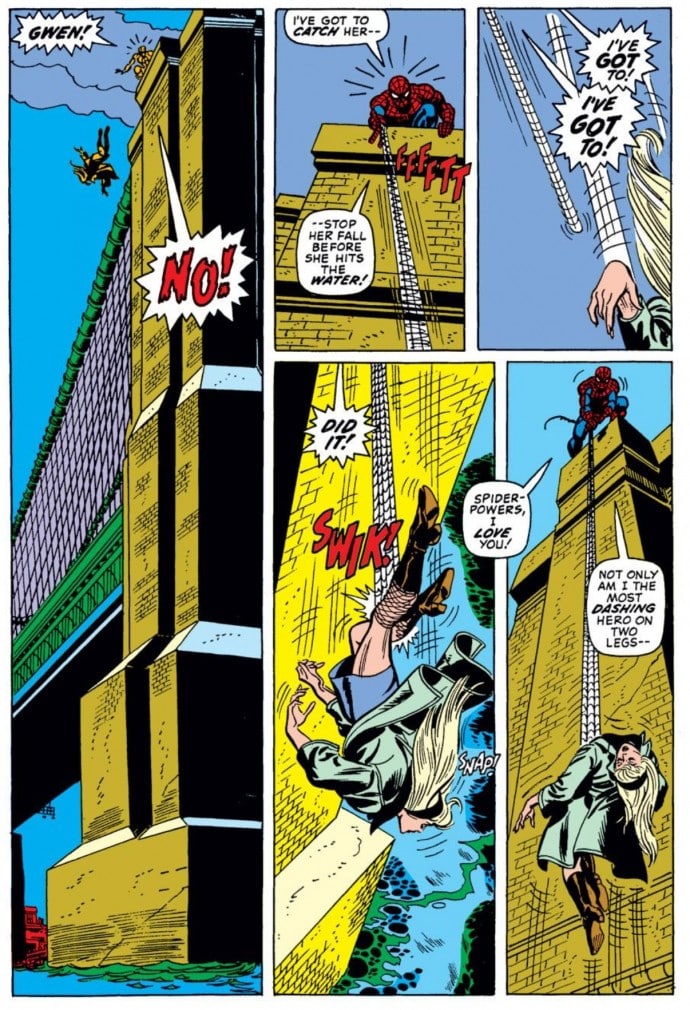
The pacing of the series allowed this happiness to be fleeting. The Green Goblin, seeking absolute revenge against Peter Parker, kidnapped Gwen and threw her off the George Washington Bridge (though the art depicted the Brooklyn Bridge). Spider-Man attempted to save her with a pensive web-snag, but as the line tightened, a distinctive “SNAP” sound effect indicated a catastrophic failure. Whether Gwen died from the fall or the sudden whiplash remains a mathematical certainty for debate among new comics historians and fans alike.
The End of the Silver Age and the Bridge Controversy
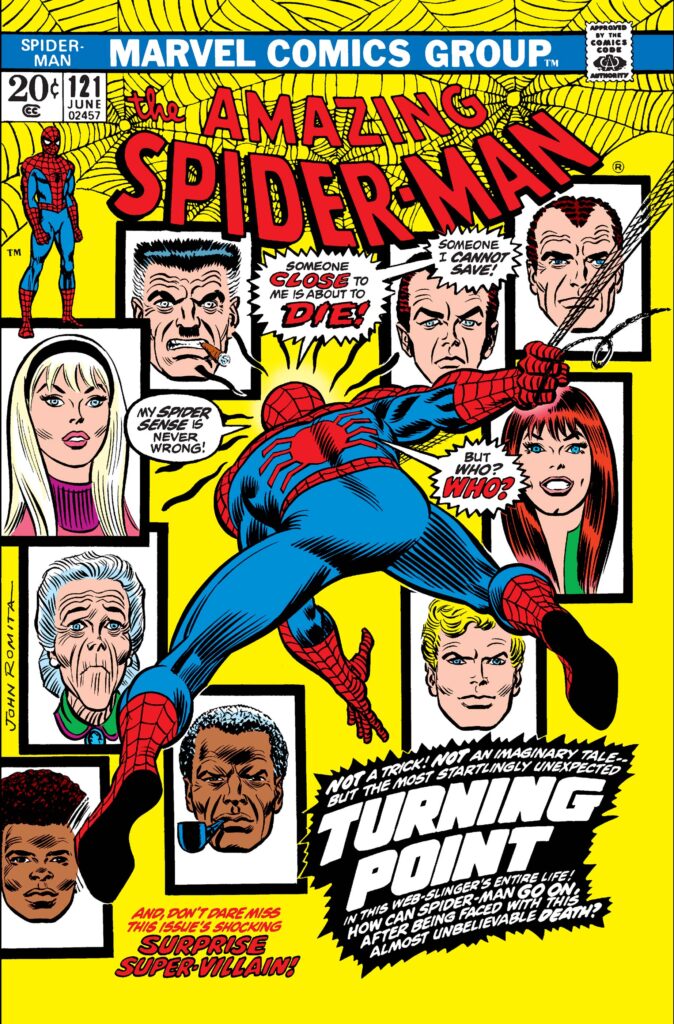
Visually, the comic book covers and interior art by Gil Kane in Amazing Spider-Man #121 created an immediate icon. The image of a desperate Spider-Man reaching for a falling Gwen Stacy provided a spectacular and horrifying sense of tension. The decision to kill Gwen Stacy remains controversial because it broke the established rules of the medium. Before her death, superheroes did not fail so catastrophically outside of an origin story. The sudden and warning-free death of a primary love interest was a pensive revelation that changed the stakes of superhero literature forever.
Transitioning from the bright, relatively safe stories of the 1960s to the darker realism of the 1970s, The Death of Gwen Stacy is often cited as the official start of the Bronze Age. The moral authority of the hero was questioned, and the consequences of their battles became permanent. For those exploring our This Day in Comics archive, this issue stands as the “Day the Music Died” for Spider-Man. He was no longer just a teenager struggling with homework and girls; he was a man defined by a tragedy he could not undo.
In addition to the primary event, the fallout of the issue led to the death of Norman Osborn (for a time) and a radical shift in Peter Parker’s character arc. The pensive analysis of his failure haunted the character for decades, influencing storylines from the Clone Saga to the modern era. Transitioning from a state of mourning to a renewed commitment to responsibility, Peter’s journey highlight the flexible and enduring nature of the Spider-Man mythos.
In conclusion, The Death of Gwen Stacy is an essential pillar of comic book history. From her debut as an undergraduate to her tragic fall on the bridge, she reflects the power of a story that refuses to take the easy way out. Whether she is being remembered in a pensive solo story or revisited through a facsimile edition, her legacy is one of love, loss, and absolute narrative authority. Don’t miss this portal into the “End of the Silver Age” when you revisit the classics this month!
📢 Join the Conversation
Do you believe Spider-Man’s web-line was the cause of Gwen’s death, or was she already gone when she hit the water? Do you think the series would have been as successful if she had survived and married Peter? Join the conversation on X and tag us @comicbookaddt to share your thoughts on Gwen Stacy!
Follow our community for more updates: