Mysterio: The 1964 Debut of Marvel’s Master of Illusions
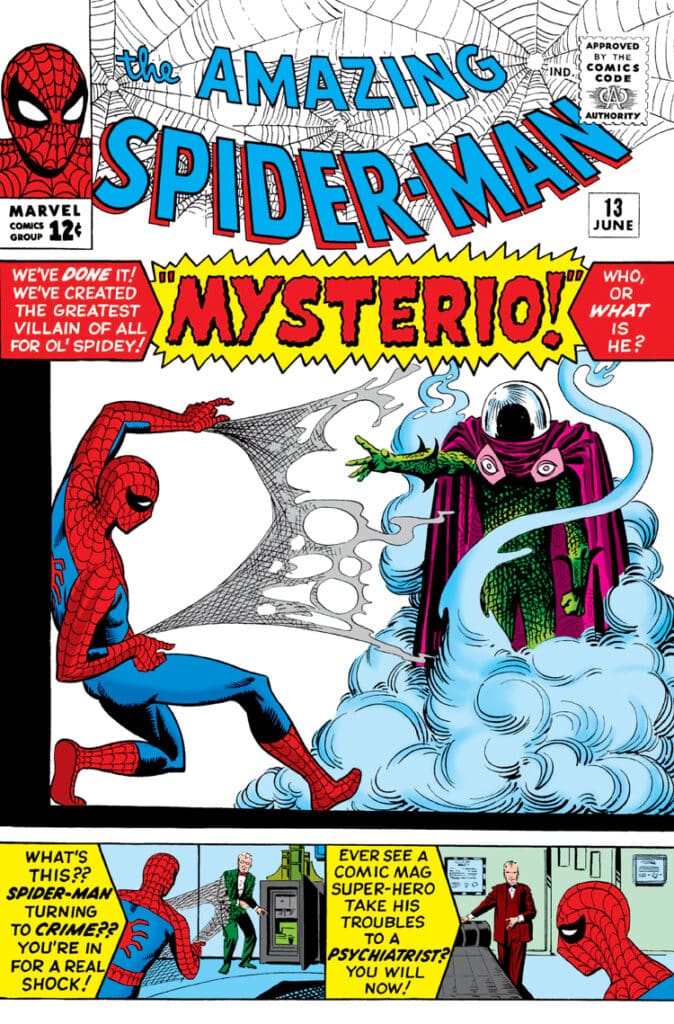
Mysterio officially entered the Marvel Universe on this day, March 10, 1964, bringing a vibrant and cinematic flair to the world of superhero villainy. Making his first appearance in the pages of The Amazing Spider-Man #13, the character was a departure from the “science experiment gone wrong” trope that defined many early Spidey foes. Created by the legendary architects Stan Lee and Steve Ditko, Quentin Beck offered a pensive look at how the art of Hollywood adventure and trickery could be weaponized against a hero.
The creative team responsible for this historic debut includes:
- Writer: Stan Lee
- Artist/Penciler: Steve Ditko
- Inker: Steve Ditko
- Publisher: Marvel Comics
The history of Mysterio is rooted in the glitz and grime of Hollywood. Quentin Beck was a gifted special effects wizard and stuntman working for a major studio with lofty dreams of making a name for himself. However, he eventually came to see his career as a dead-end job. His attempts to transition from behind-the-scenes work to becoming a famous actor were poorly received, fueling a deep-seated resentment toward the industry. Beck realized that while he couldn’t find fame as a hero on the screen, his expertise in illusions could make him a master among the ranks of supervillains.
Hollywood Hustle and the Birth of a Supervillain
What readers should understand about the March 10th anniversary is the tactical brilliance Mysterio displayed in his opening act. Instead of a direct physical assault, Beck chose to attack Spider-Man’s reputation. He successfully framed the wall-crawler for a high-profile robbery at the Midtown Museum, utilizing his Hollywood skills to mimic the hero’s powers. Consequently, Spidey found himself a fugitive, hunted by the very city he sought to protect.
When the two finally clashed, Mysterio utilized a toolkit of tricks that neutralized Spider-Man’s greatest advantages. He developed a specialized gas that obstructed the hero’s spider-sense, leaving Peter Parker vulnerable to surprise attacks. Furthermore, he utilized a chemical abrasive that could dissolve Spider-Man’s webbing on contact. Transitioning from a disgruntled stuntman to a villain who could outplay a superhuman, Beck established a hierarchy of psychological warfare that would remain his signature for decades.
The First Battle: Gas, Grime, and the Midtown Museum
Visually, the comic book covers and interior art by Steve Ditko created an immediate icon. The “fishbowl” helmet and the smoke-drenched aesthetic provided a spectacular sense of mystery. It is a mathematical certainty that without Ditko’s unique design, the character might not have endured. In their first battle, Spider-Man was nearly defeated by Beck’s smokescreens and hall of mirrors. However, the hero’s ingenuity won the day. Spidey managed to trick Beck into bragging about the museum robbery, capturing the confession on tape.
Following his arrest and subsequent jailing, Mysterio blamed Spider-Man for his ruined career, a pensive hatred that would lead to his role as a founding member of the Sinister Six. For those exploring our This Day in Comics archive, the March 10th debut is a reminder of how early Spidey stories balanced high-concept action with grounded human frustration. Beck wasn’t a monster; he was a man who felt the world didn’t appreciate his talent, and he decided to make everyone watch his performance.
In addition to his early appearances, the character’s longevity is a testament to the versatility of the “Master of Illusions.” Whether he is haunting the mind of Daredevil in the “Guardian Devil” arc or clashing with the entire Marvel Universe during Secret Wars, Quentin Beck remains a mandatory piece of Marvel history. Transitioning from the simple parlor tricks of the 60s to the high-tech holograms of the modern era, the character reflects the evolution of special effects in real life.
In conclusion, Mysterio is an essential pillar of the Spider-Man mythos. From his debut as a disgraced Hollywood worker to his status as a seasoned commander of deceit, he reflects the power of perception. Whether he is appearing in new comics today or being revisited in classic reprints, his legacy is one of smoke, mirrors, and absolute tactical brilliance. Don’t miss this portal into the “Master of Illusions” when you revisit the Silver Age this month!
📢 Join the Conversation
Who is your favorite Master of Illusion: Quentin Beck, Daniel Berkhart, or Francis Klum? Do you think the fishbowl helmet is the coolest villain design in Marvel history? Join the conversation on X and tag us @comicbookaddt to share your thoughts on Spider-Man’s most cinematic foe!
Follow our community for more updates: