
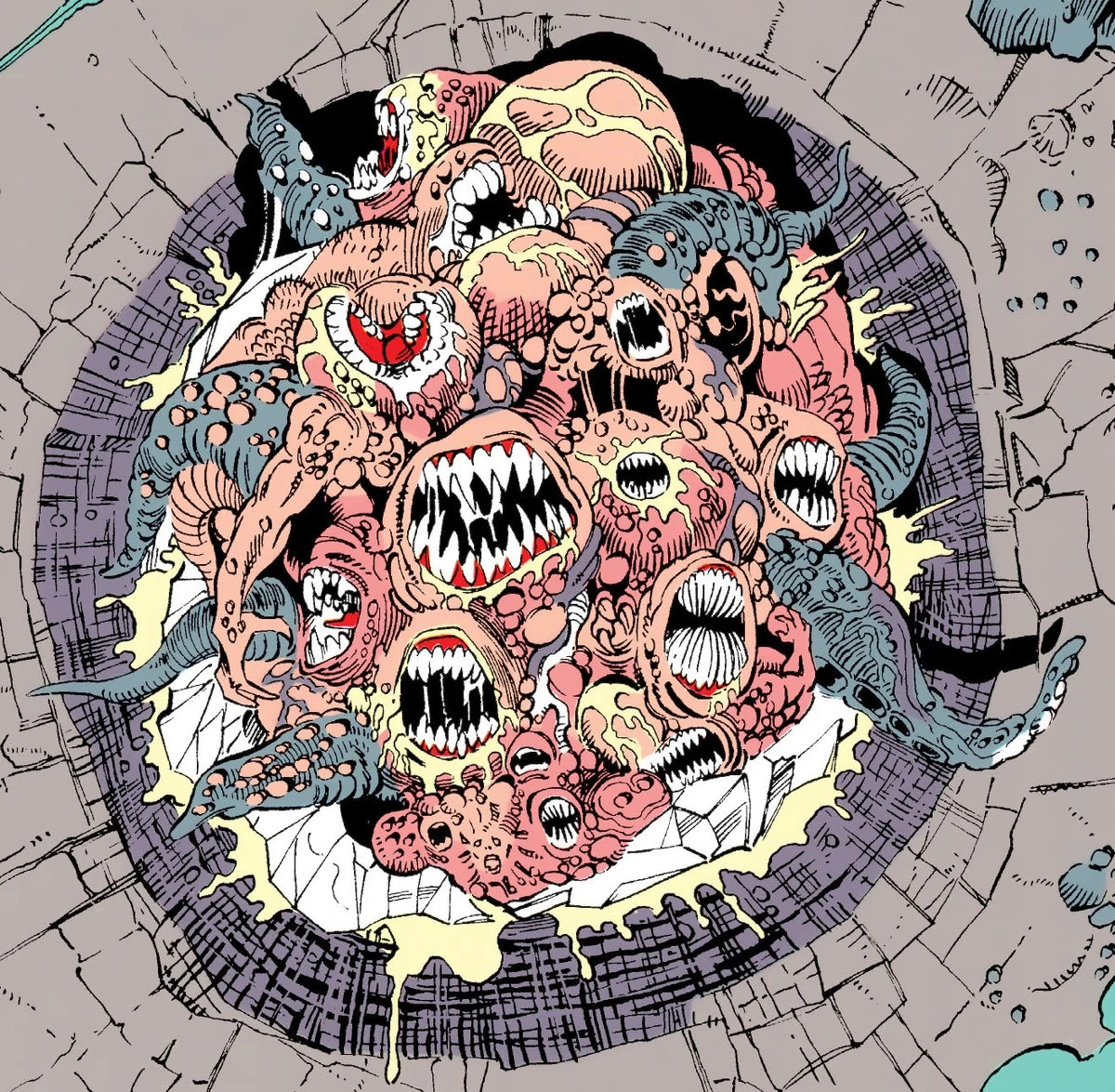
Lifeform: The Forgotten Body Horror Epic of the 90s
Lifeform is officially one of the most visceral and daring experiments of the early 1990s Marvel era, offering a narrative structure that few crossovers have dared to replicate since. Running through four specific 1990 Annuals, the story tracks the steady and terrifying transformation of a human being into an unstoppable, planet-threatening engine of destruction. For fans who enjoy the darker corners of Marvel Comics, this event represents a pensive look at the consequences of scientific hubris and the biological horror inherent in the superhero genre.
The creative engine behind this landmark crossover includes:
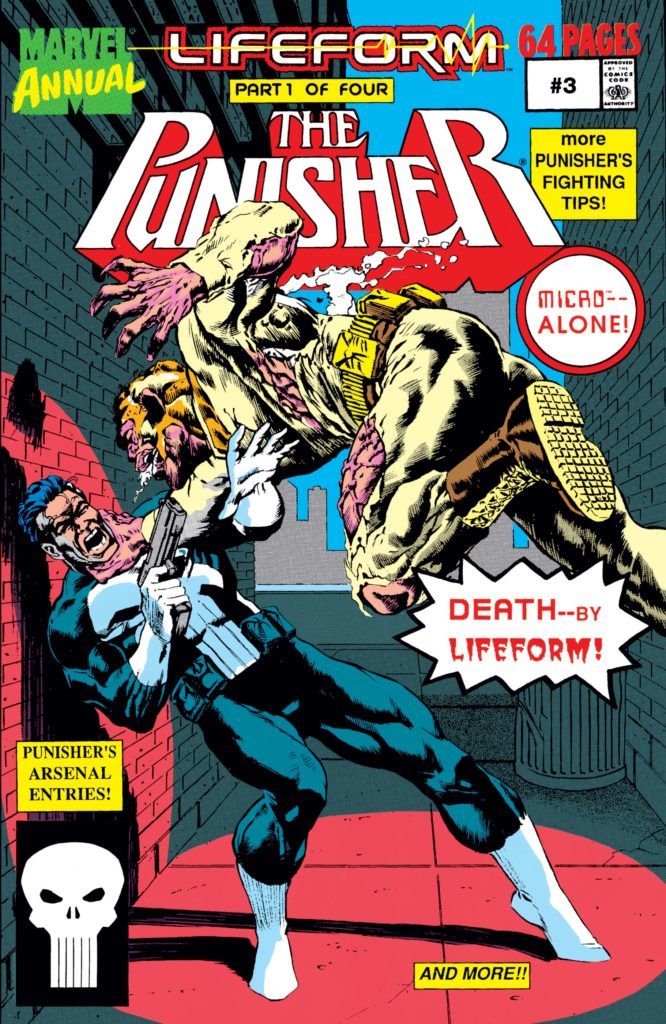
- Part 1 (Punisher Annual #3): Mike Baron (W) & Neil Hansen (A)
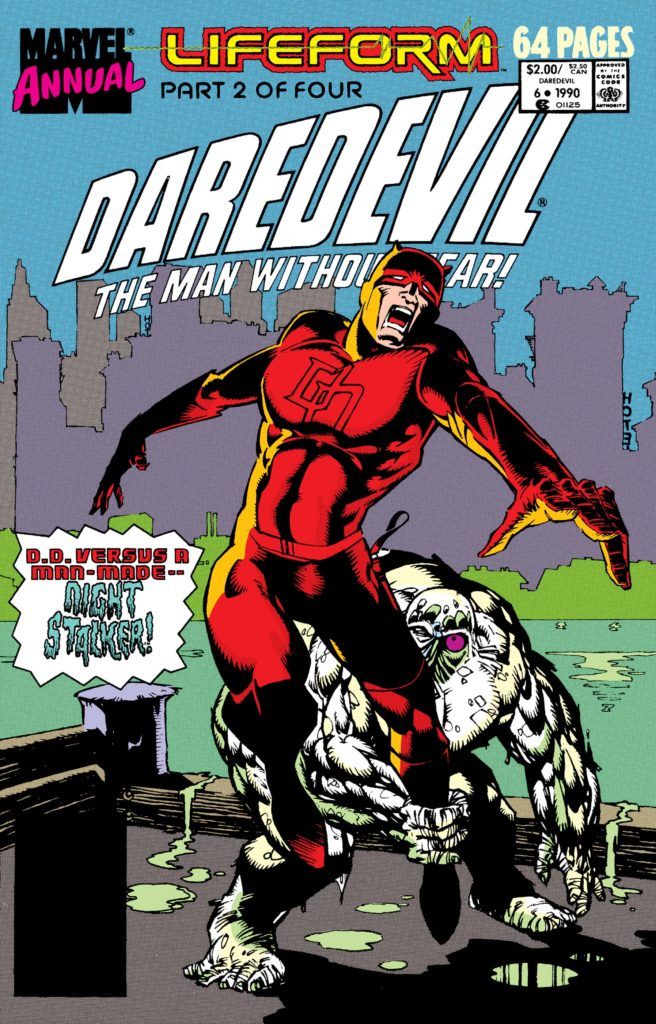
- Part 2 (Daredevil Annual #6): Gregory Wright (W) & Jackson Guice (A)
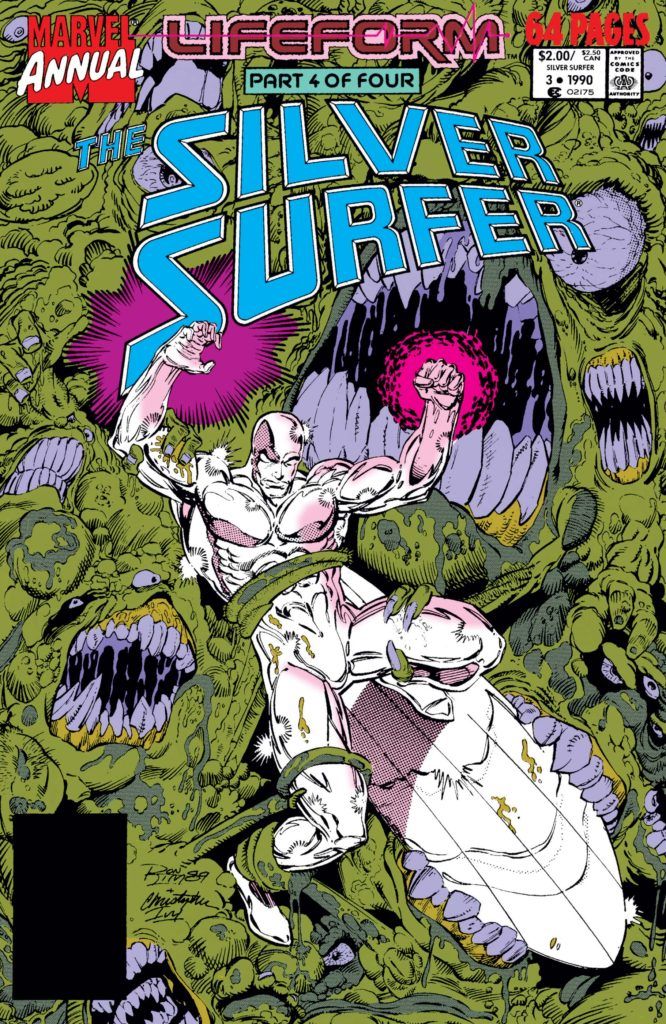
- Part 3 (Silver Surfer Annual #3): Jim Starlin (W) & Ron Lim (A)
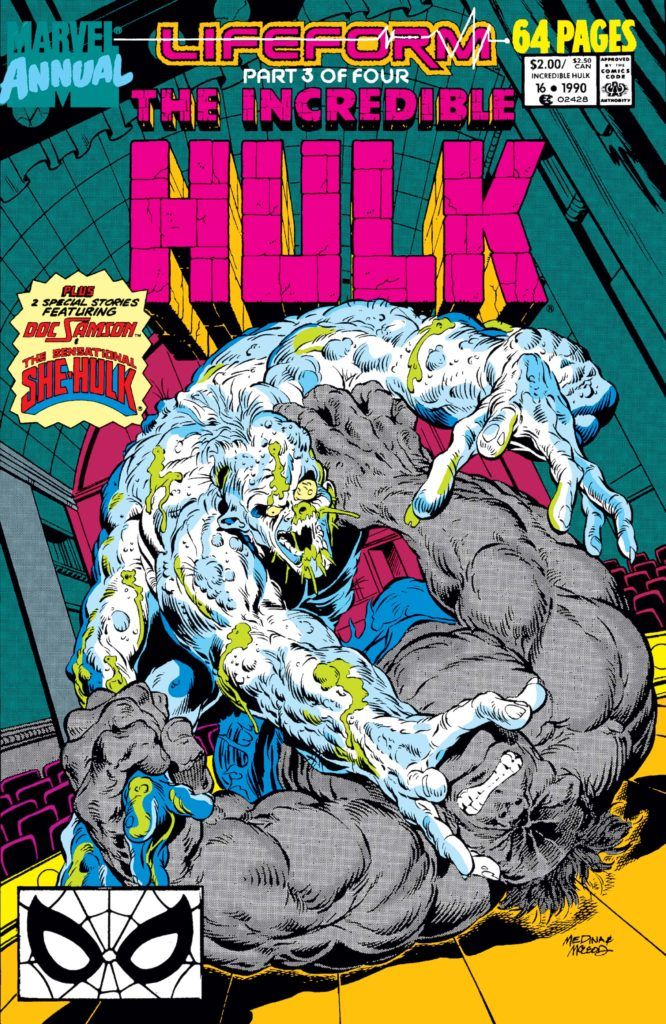
- Part 4 (Incredible Hulk Annual #16): Peter David (W) & Angel Medina (A)
The story begins with George P. Lefort, an AIM scientist who inadvertently becomes the first victim of a prototype virus known as the “Lifeform” mutagen. Initially, George believes he can control the changes, but his body soon begins to rewrite its own genetic code with unwavering efficiency. Consequently, the event isn’t just about a monster attack; it is about the slow, agonizing death of George Lefort’s humanity as he is replaced by an ever-evolving biological nightmare.
The Tragic Mutation of George Lefort in Lifeform
What readers should prepare for in Lifeform is a narrative that escalates in scale and power level with every issue. In the first chapter, the Punisher encounters a mutated George in the rain-slicked alleys of New York. At this stage, George is still somewhat recognizable, though his strength is already reaching superhuman levels. Frank Castle’s pragmatic approach to problem-solving meets its match in a creature that can shrug off high-caliber rounds. This street-level introduction sets a pensive tone for the horror to follow.
By the time the story reaches Daredevil, the mutation has progressed significantly. The creature is larger, more grotesque, and beginning to lose its ability to speak. Transitioning from the noir streets of the Punisher to the acrobatic rooftops of Hell’s Kitchen, the story highlights the creature’s adaptability. Meanwhile, the comic book covers for these annuals emphasized the “glow-in-the-dark” and foil-heavy trends of the 90s, though the content inside remained surprisingly grounded in character-driven dread.
Body Horror Meets Superhero Action
Visually, Lifeform reaches its peak when it moves into the cosmic and gamma-powered realms. In the Silver Surfer chapter, Jim Starlin and Ron Lim explore the creature’s threat on a galactic scale. The creature has grown to monolithic proportions, now capable of absorbing matter and energy at an exponential rate. It is a mathematical certainty that fans of the Starlin era will find the existential dialogue between the Surfer and the fading consciousness of George Lefort to be a highlight of the event.
The finale, handled by the legendary Peter David and artist Angel Medina, pits the Incredible Hulk against the fully realized Lifeform. By this stage, the creature is no longer George Lefort; it is a biological singularity that threatens to consume the Earth. David’s script provides a pensive ending that reflects on the nature of survival and the burden of those who remain behind. Transitioning between the visceral gore of the early chapters and the high-concept science fiction of the finale, the creative teams established a hierarchy of threat that felt genuinely earned.
Furthermore, the event serves as a reminder of the authority Marvel had over the “Annual Crossover” format during this period. While many readers focus on Infinity Gauntlet or Maximum Carnage, this event offered something more intimate and unsettling. Whether you are following the tactical struggle of the Punisher or the world-shaking battle of the Hulk, the story remains a mandatory read for anyone tracking the evolution of new comics in the 90s.
In conclusion, Lifeform is a masterclass in escalating stakes and biological horror. By pairing a tragic origin with a variety of Marvel’s most iconic heroes, the event proved that the “House of Ideas” wasn’t afraid to get dangerous with its characters. Whether you love the grit of the streets or the scale of the cosmos, this mutation odyssey is a standout hit that deserves a place in your long box. Don’t miss this portal into one of Marvel’s most unique experiments!
Punisher Annual #3
The first appearance of Lifeform! Who is this bestial, ever-evolving foe, and why is the Punisher dead set on killing him?
Daredevil Annual #6
Chapter Two In the “Lifeform” cross-annual saga! New York City becomes the prey for the Lifeform.
Incredible Hulk Annual #16
Lifeform separates the Hulk and Bruce Banner, pitting the two halves against each other!
Silver Surfer Annual #3
The Silver Surfer prepares to destroy the creature when the voice of George Prufrock calls out to him. He pleads for the Surfer to kill him and end his misery.
📢 Join the Conversation
Do you think George Lefort’s story is one of Marvel’s saddest origins? Which chapter had the best creature design—Punisher, Daredevil, Surfer, or Hulk? Join the conversation on X and tag us @comicbookaddt to share your thoughts on this 90s classic!
Follow our community for more updates:
Tumblr


One Comment on “Lifeform: The Underrated Marvel Horror-Action Event”
Comments are closed.