Angar the Screamer: The 1973 Debut of Marvel’s Sonic Psychopath
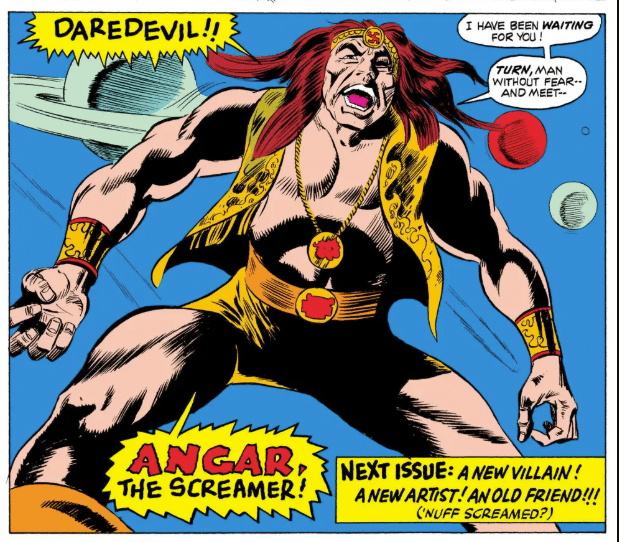
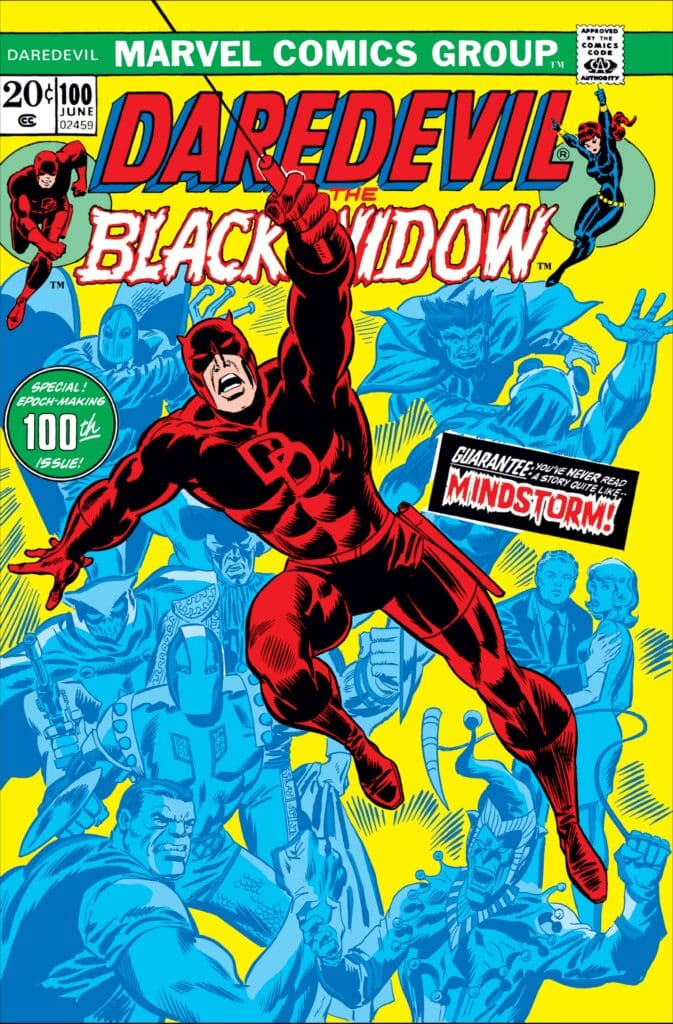
Angar the Screamer officially screamed his way into the Marvel Universe on this day, March 6, 1973, marking a milestone moment in the Bronze Age of comics. Making his first appearance in the double-sized Daredevil #100, the character introduced a uniquely psychedelic and pensive threat to the Man Without Fear. Created by writer Steve Gerber and legendary artist Gene Colan, David Angar was a character born from the counter-culture movements of San Francisco, transformed into a living weapon by extraterrestrial technology and human greed.
The creative team responsible for this historic debut includes:
- Writer: Steve Gerber (Howard the Duck, Man-Thing)
- Artist/Penciler: Gene Colan (Tomb of Dracula, Daredevil)
- Inker: John Tartaglione
- Publisher: Marvel Comics
The history of Angar the Screamer is as bizarre as the era that birthed him. Born in San Francisco, David Angar became a prominent hippie and radical social activist, known for his fiery rhetoric and commitment to social change. Seeking a way to amplify his voice—quite literally—he volunteered for a mysterious experiment that promised to grant him superhuman abilities. Consequently, his journey from activist to assassin serves as a pensive reminder of how high ideals can be corrupted by the hunger for power.
The Psychedelic Powers of Angar the Screamer
What readers should understand about the March 6th anniversary is the terrifying nature of David Angar’s abilities. During the experiment, his vocal cords were subjected to a bombardment of hypersound using a machine built on the moon Titan. As a result, he gained the ability to produce a sonic scream that could do far more than shatter glass. The sound waves produced by Angar the Screamer would cause anyone within earshot to hallucinate, experiencing visions that were almost uniformly disturbing and violent in nature.
Angar himself was immune to the effects of his own voice, allowing him to navigate the chaos he created with pensive ease. Furthermore, his powers had a secondary, insidious effect: he could cause his victims to lose all memory of his attacks. This made him the perfect tool for covert operations and high-stakes assassinations. For fans who track new comics for their psychological depth, the way Angar weaponized trauma through sound remains a highlight of Steve Gerber’s experimental run on Daredevil.
The Titan Connection and the Betrayal of Moondragon
The origin of Angar the Screamer is inextricably linked to the cosmic side of the Marvel Universe. The Titan machine that granted him his powers was provided by Moondragon, who at the time was operating under the guise of “Madam MacEvil.” Her intention was for Angar to be a pensive and powerful ally in the coming war against the mad Titan, Thanos. However, her plan backfired when a crooked lawyer named Kerwin J. Broderick seized control of the operation. Broderick, motivated by profit rather than cosmic survival, hired Angar to serve as his personal assassin.
In his debut mission, Angar was tasked with eliminating Daredevil and the Black Widow. The conflict in Daredevil #100 showcased the absolute authority of Angar’s power, as Matt Murdock—whose heightened senses made him particularly vulnerable to sonic attacks—struggled to differentiate reality from the nightmare visions. Transitioning from the gritty streets of San Francisco to a world of distorted perceptions, the art team utilized a vibrant and surreal style that has since become synonymous with the character’s comic book covers.
While he was eventually defeated by Daredevil, Angar the Screamer would go on to fight many of Marvel’s greatest superheroes over the subsequent decades. He developed a reputation for being an agent of pure chaos, frequently attacking large crowds of civilians for little or no apparent reason. This lack of a traditional criminal hierarchy made him unpredictable and dangerous, a loose cannon in the Marvel rogues’ gallery. Whether he was appearing in the pages of Spider-Woman or joining the first iteration of the Thunderbolts, Angar remained a pensive figure of the “weird” Marvel 70s.
In conclusion, Angar the Screamer is a mathematical certainty for any list of Marvel’s most unique sonic villains. From his debut as a radical activist to his status as a cosmic-powered mercenary, he reflects the experimental spirit of the 1970s comic industry. Whether he is haunting the mind of Daredevil or inducing mass panic in a city square, his legacy is one of noise, memory loss, and absolute terror. Don’t miss this portal into one of the Marvel Age’s most distinctive debuts when you revisit the classics this month!
📢 Join the Conversation
Is Angar the Screamer the most underrated sonic villain in the Marvel Universe? Do you prefer his early 70s hippie look or his later, more traditional villainous costumes? Join the conversation on X and tag us @comicbookaddt to share your thoughts on David Angar!
Follow our community for more updates: