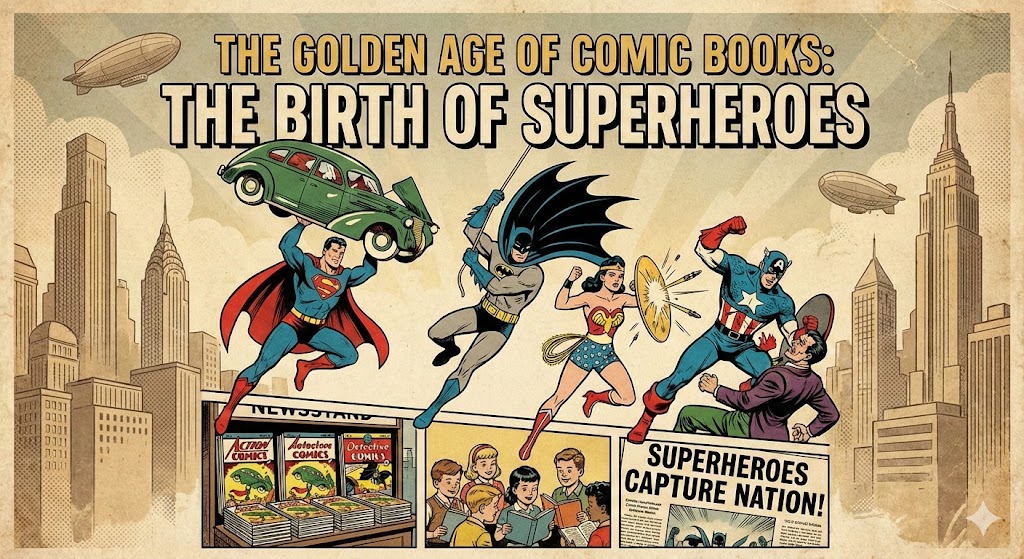
Golden Age of Comic Books: The Birth of Superheroes
Golden Age of Comic Books is a period of American comic book history that saw the vibrant rise of the superhero archetype. Generally defined as lasting from 1938 to 1956, this era began with the debut of Superman in Action Comics #1. It was a time of pure adventure and imagination, where characters like Batman, Wonder Woman, and Captain America first captured the public’s heart. According to Wikipedia, this period fundamentally changed the landscape of popular culture forever.
The creative giants of this era include:
- Writers: Jerry Siegel, Bill Finger, Gardner Fox
- Artists: Joe Shuster, Bob Kane, Jack Kirby, Joe Simon
- Publishers: DC Comics (National), Timely Comics (Marvel), Fawcett Comics
During these years, the medium matured rapidly. What started as “funny pages” in newspapers evolved into the modern comic book format we recognize today. As Stephanie Bri notes, discovering the greatness of this era reveals how these early creators laid the groundwork for everything we see in the MCU and DCU today. Transitioning from simple newspaper strips to 64-page anthologies allowed for deeper storytelling and more complex character arcs.
The Rise of the Hero During the Golden Age of Comic Books
The primary driver of the Golden Age of Comic Books was the incredible popularity of the superhero. After Superman’s debut, every publisher scrambled to create their own “Mystery Man.” This led to the creation of the Justice Society of America, the first superhero team, which is detailed extensively by the Golden Age Comics Fandom. These stories often featured clear-cut battles between good and evil, providing much-needed escapism for a world heading into World War II.
For many collectors, the “best of” books from this era are the holy grails of the hobby. From the first appearance of the Joker to the debut of the Flash, these issues command staggering prices at auction. The Intelligent Collector highlights how these books are not just entertainment, but historical artifacts of 20th-century Americana. Meanwhile, Dale Roberts Comics offers a great perspective on the current market value and rarity of these paper treasures.
The Dark Side of the Golden Age
While we often look back at this time with rose-colored glasses, it is important to acknowledge the dark side of Golden Age comics. The era was unfortunately rife with racial stereotypes and wartime propaganda that can be difficult to read today. However, understanding these elements is crucial for a complete view of the medium’s history. As Thoughtful Mirth explains, the medium was a reflection of the society that produced it, for better and for worse.
In addition to the social issues, the industry faced internal turmoil. The ToonsMag history guide details how publishers often took advantage of creators, leading to decades of legal battles for characters like Superman. Despite these challenges, the sheer volume of output was staggering. For those looking to explore these stories without spending millions, sites like GoldenAgeComics.org and Hero Goggles provide access to public domain titles that have long since fallen out of copyright.
As the 1940s drew to a close, the popularity of superheroes began to wane in favor of crime, horror, and romance titles. This shift eventually led to the transition into the Silver Age. The DC Multiverse Historian provides an excellent breakdown of how the tone and continuity shifted between these two legendary epochs. For fans tracking new comics, seeing how modern writers homage these early days is always a treat.
Furthermore, the comic book covers of the 1940s are legendary for their bold colors and dynamic layouts. Whether it was Captain America punching a dictator or Batman swinging over Gotham, the art was designed to grab a kid’s attention at the newsstand. You can find comprehensive category lists of these classic issues that show just how diverse the marketplace truly was before the implementation of the Comics Code Authority.
In conclusion, the Golden Age of Comic Books remains the foundation of the modern entertainment industry. It was a time of immense growth, cultural impact, and the creation of myths that still resonate today. By studying the origins of these characters, we gain a deeper appreciation for the writers and artists who dared to dream of men who could fly.
📢 Join the Conversation
Who is your favorite hero from the 1940s? Do you think Action Comics #1 is still the most important book ever made? Join the conversation on X and tag us @comicbookaddt to share your thoughts on comic history!
Follow our community for more updates: